
THE FIRST ELECTION OBSERVERS
– UNTAG in Namibia, 1989 –

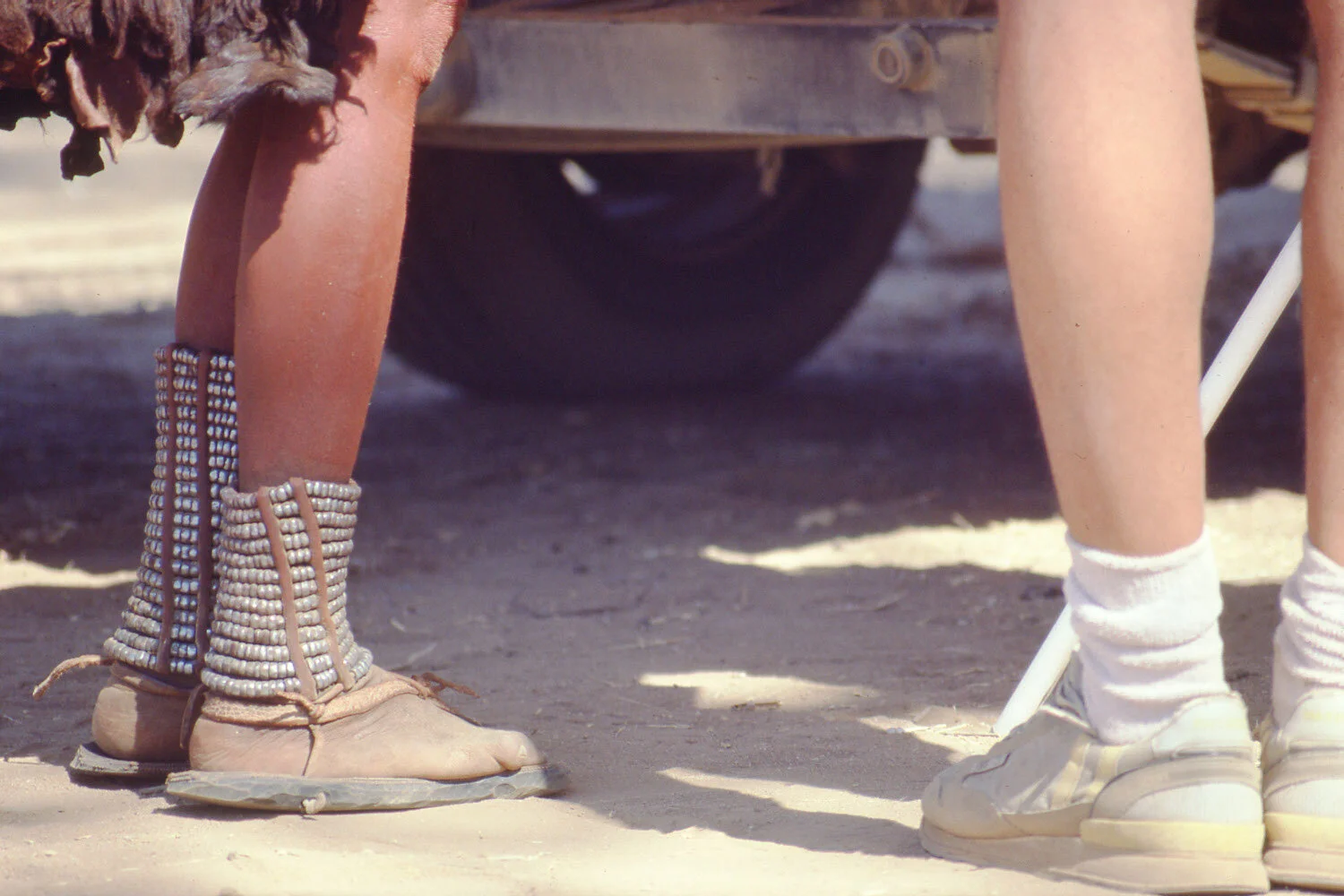
Photo: Lars Nopp, Kaokoland, Namibia, 1989, “Namibia Stands on Its Own Two Feet”
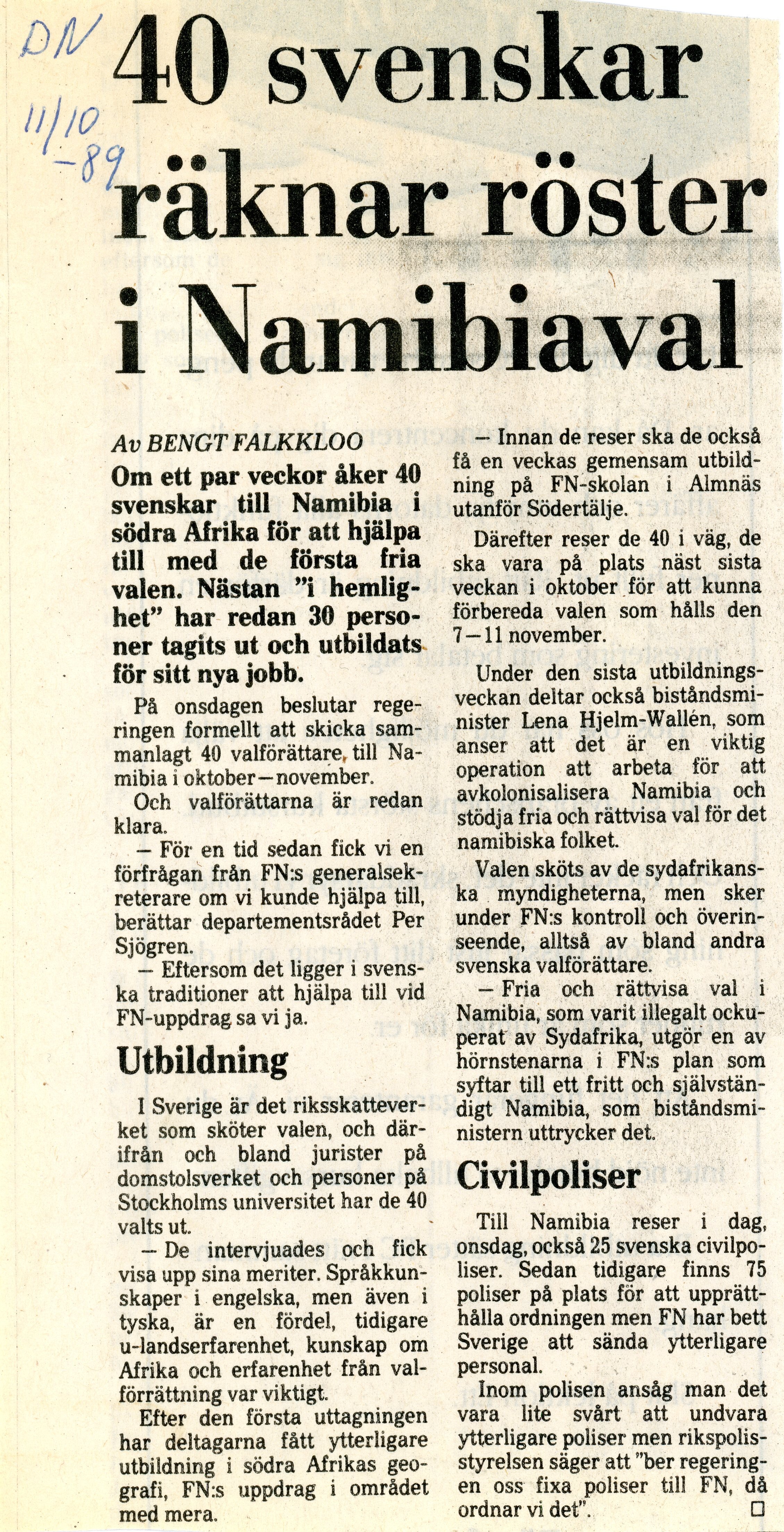
In February 1989, Ann-Charlotte Åkerblom and Tord Drugge, both living in Luleå, were given the opportunity to apply to the Swedish International Development Authority (Sida) to serve as UN election observers in Namibia.
Due to political unrest in the country, the election dates were postponed to 7–11 November 1989. A total of 164 applicants were invited to Stockholm for language tests and interviews at Sida. In August of that year, it was confirmed that Åkerblom and Drugge, together with 38 other election observers (including 10 women) from different parts of Sweden, had been selected to carry out the assignment between 27 October and 18 November 1989.
Sweden had also been deploying civilian police officers to the mission since April 1989, with their number reaching 100 by the end of the year. The Swedish Armed Forces had also prepared to deploy military peacekeeping units to the mission. However, because of Sweden's outspoken opposition to South Africa's apartheid regime, South Africa vetoed Swedish military participation at the last moment.
The United Nations Transition Assistance Group (UNTAG) is regarded as one of the largest UN operations of its kind, but also as one of its most successful. The mission originated in UN Security Council Resolution 435 of 1978, with the objective of laying the foundations for an independent Namibia through free and fair elections. The elections marked a historic turning point for Namibia, paving the way for the country's independence and freedom from the rule of the apartheid regime. The mission was led by the UN Secretary-General's Special Representative, Martti Ahtisaari.
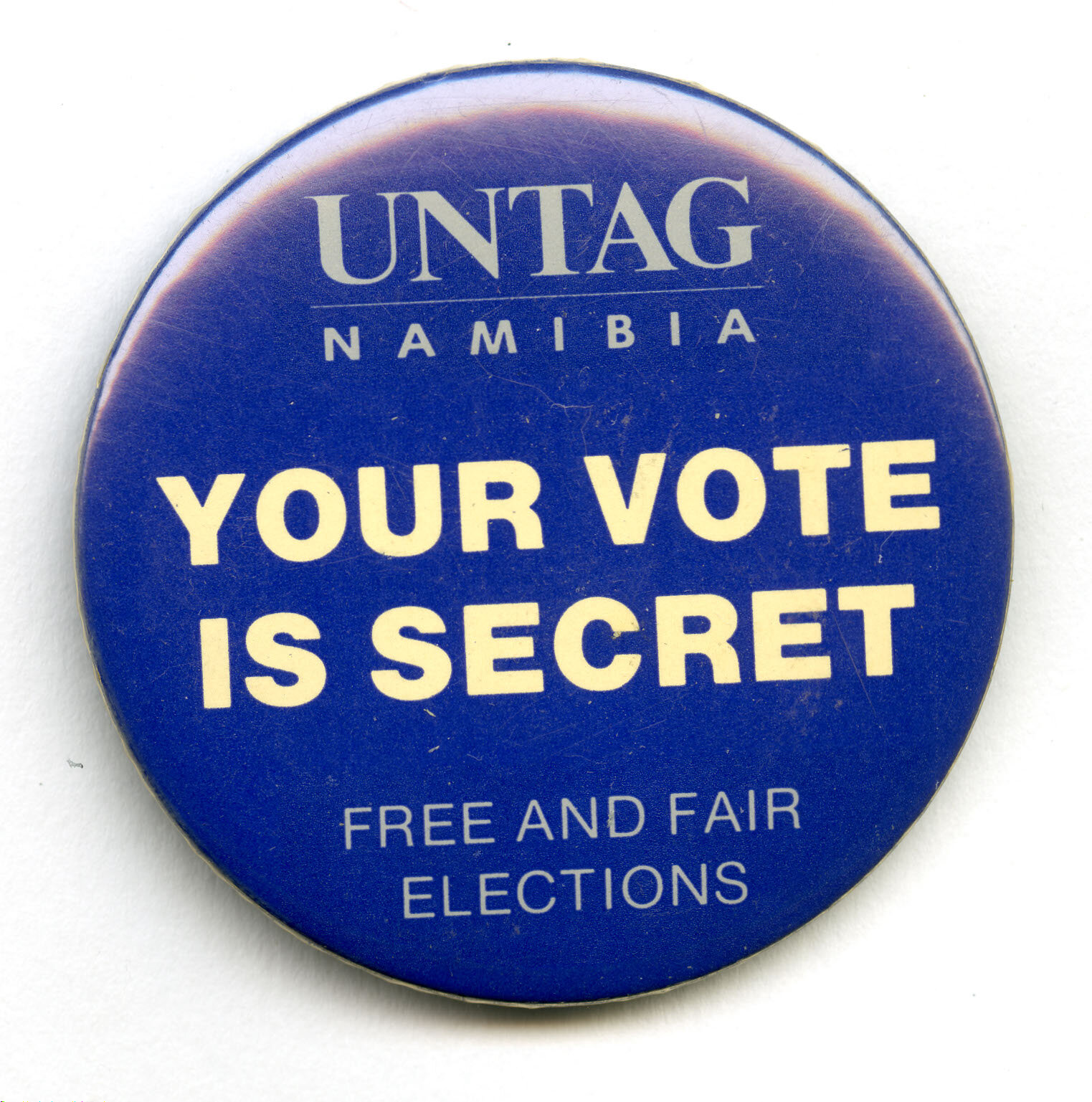
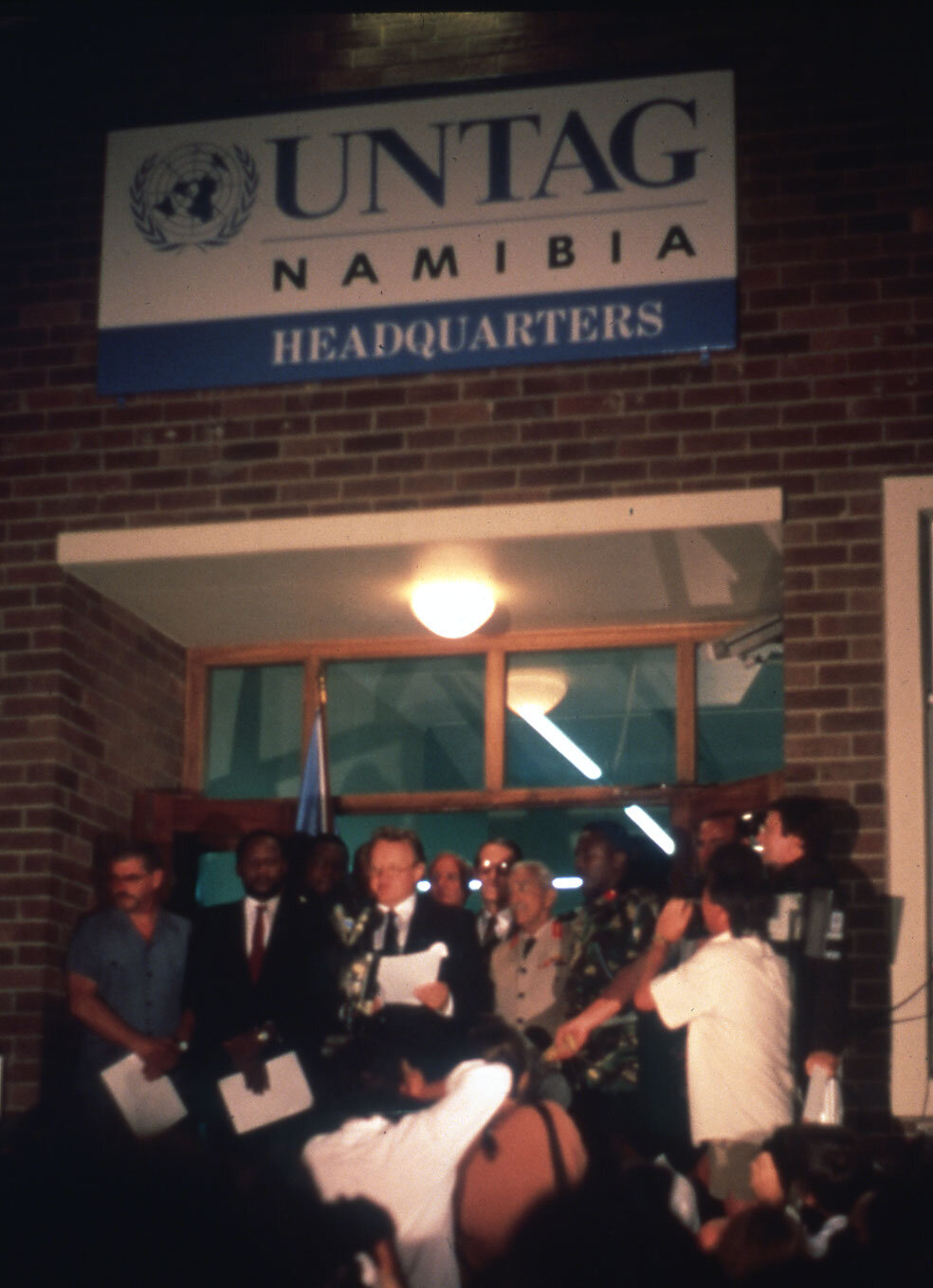
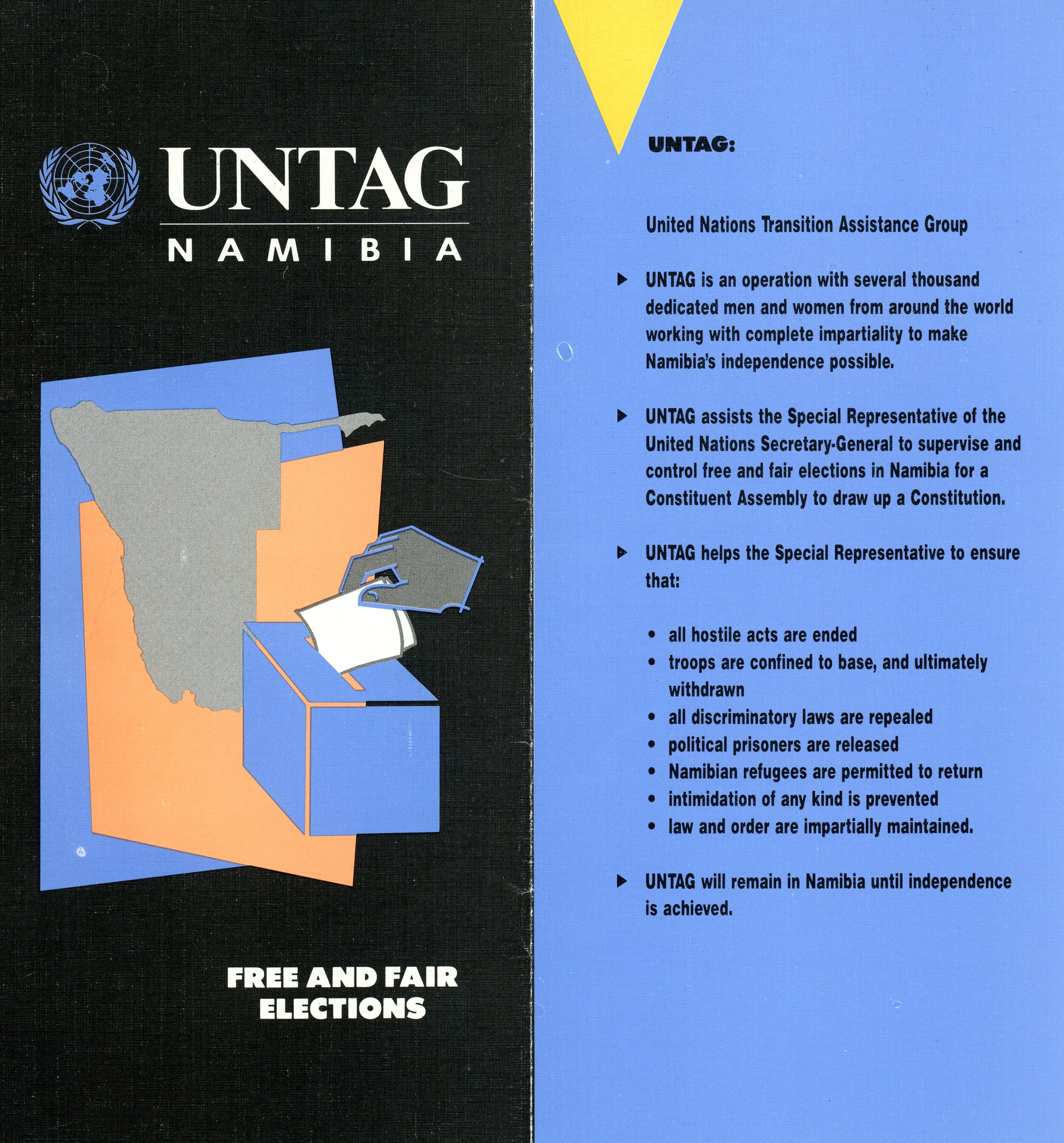
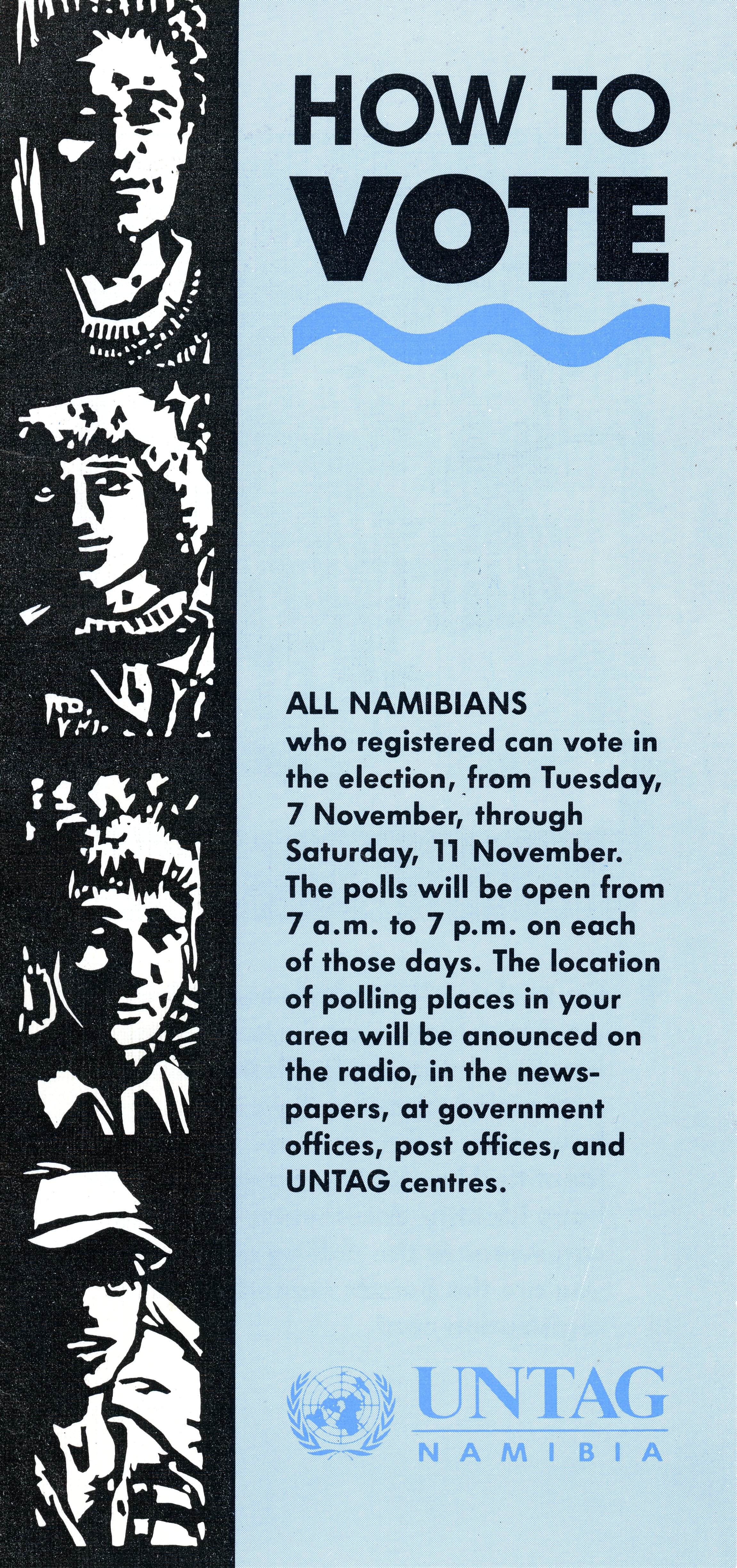
The UNTAG mission marked the beginning of Sweden's participation in what is now known as international election observation. During the 1990s, Sweden continued, through Sida, to support peacekeeping operations in a similar way, primarily through the United Nations, by providing election observers around the world, including in Cambodia, Tanzania, South Africa, Eritrea and Uganda.
Since the mid-1990s, Sweden has participated in dedicated election observation missions conducted by the OSCE/ODIHR and the European Union, and, on a few occasions, in missions led by the Organization of American States (OAS) and The Carter Center (TCC). In January 2016, the Folke Bernadotte Academy (FBA) took over responsibility from Sida for seconding, preparing and training Swedish election observers and statisticians for election missions conducted by these organisations.
Ann-Charlotte Åkerblom describes the preparations in Sweden and the journey to Namibia in her diary:
“27 October 1989: After five days of training in September at Sida's training centre in Uppsala and three days at the Swedish Armed Forces UN Training School in Almnäs, Södertälje, it was finally time to leave for Namibia.
An early start, a quick shower in the barracks, and then out to the waiting bus at 0500. Our luggage had been loaded onto a lorry the previous evening. Breakfast in the staff canteen at Arlanda Airport, and then off on a scheduled SAS flight to Amsterdam, where we spent a few hours shopping and generally waiting around.
We met the Norwegian contingent and got to know some of them while still at the airport. When it was time to depart on a UN-chartered Martinair aircraft, there were also election observers from Denmark, Finland, Switzerland and West Germany on board.
During our stopover in Lagos, Nigeria, where the temperature was a pleasantly warm 26°C in the middle of the night, the Nigerian election observers boarded to a round of applause. The same thing happened in Brazzaville, Congo, where our Airbus was filled to the very last seat.”
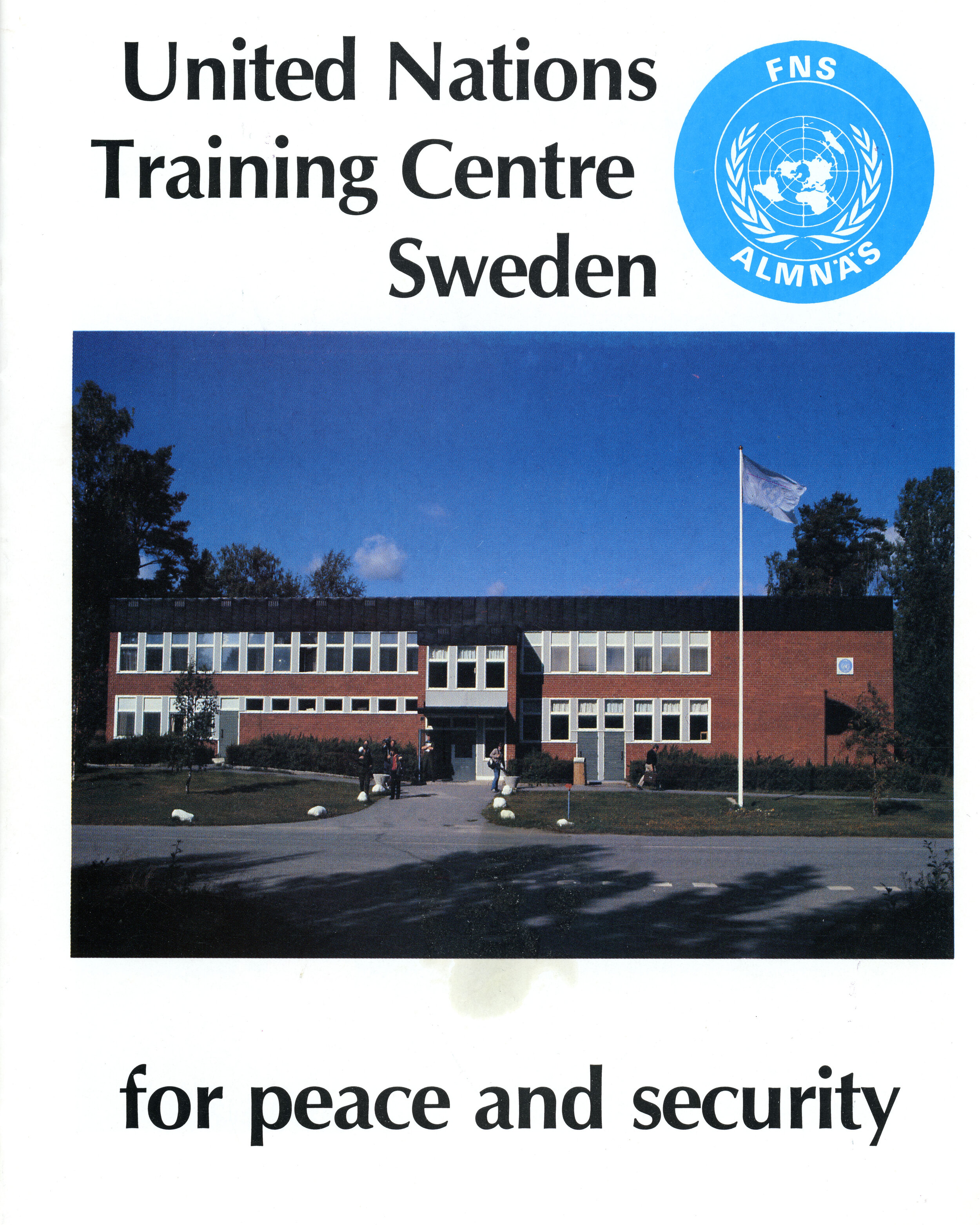
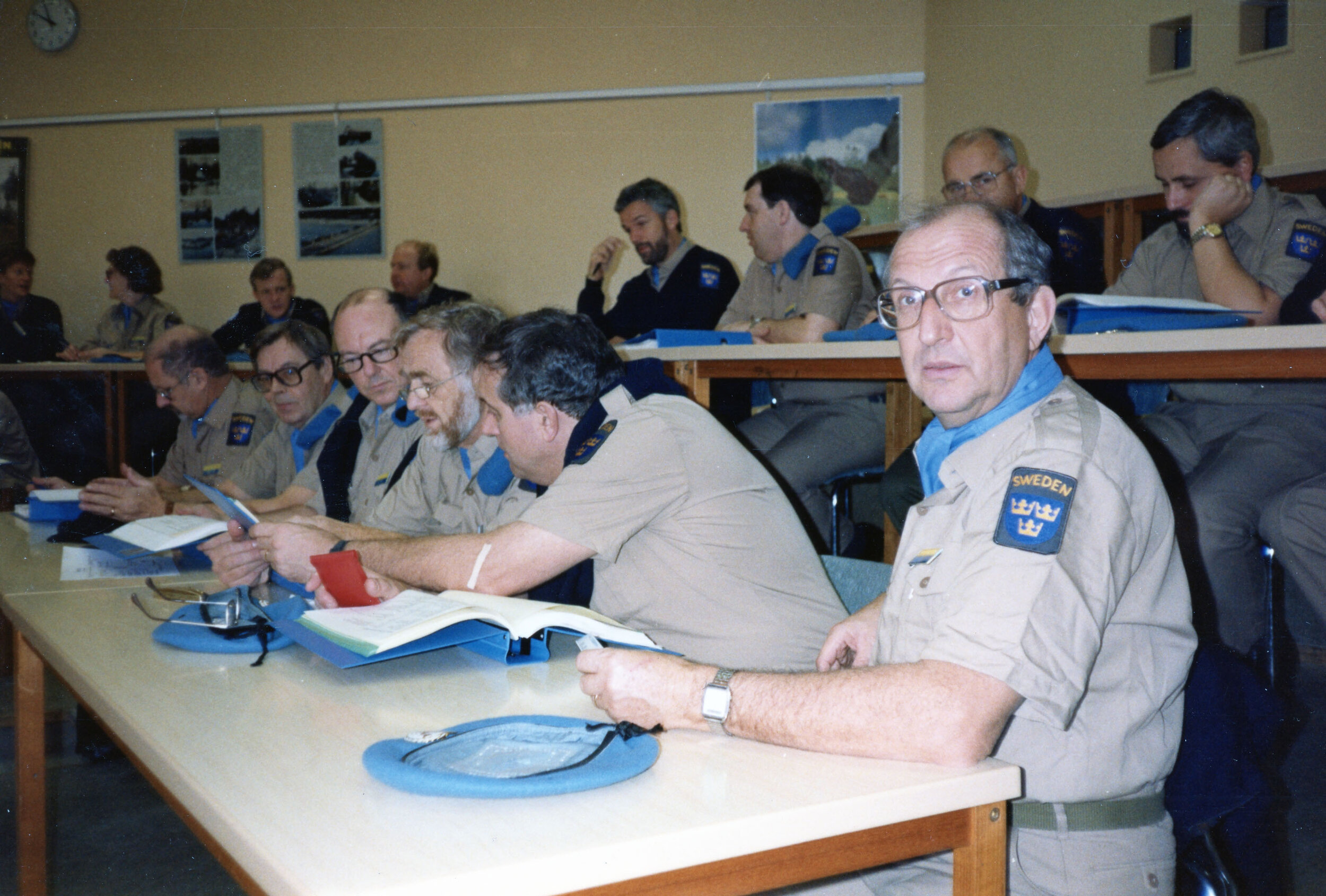
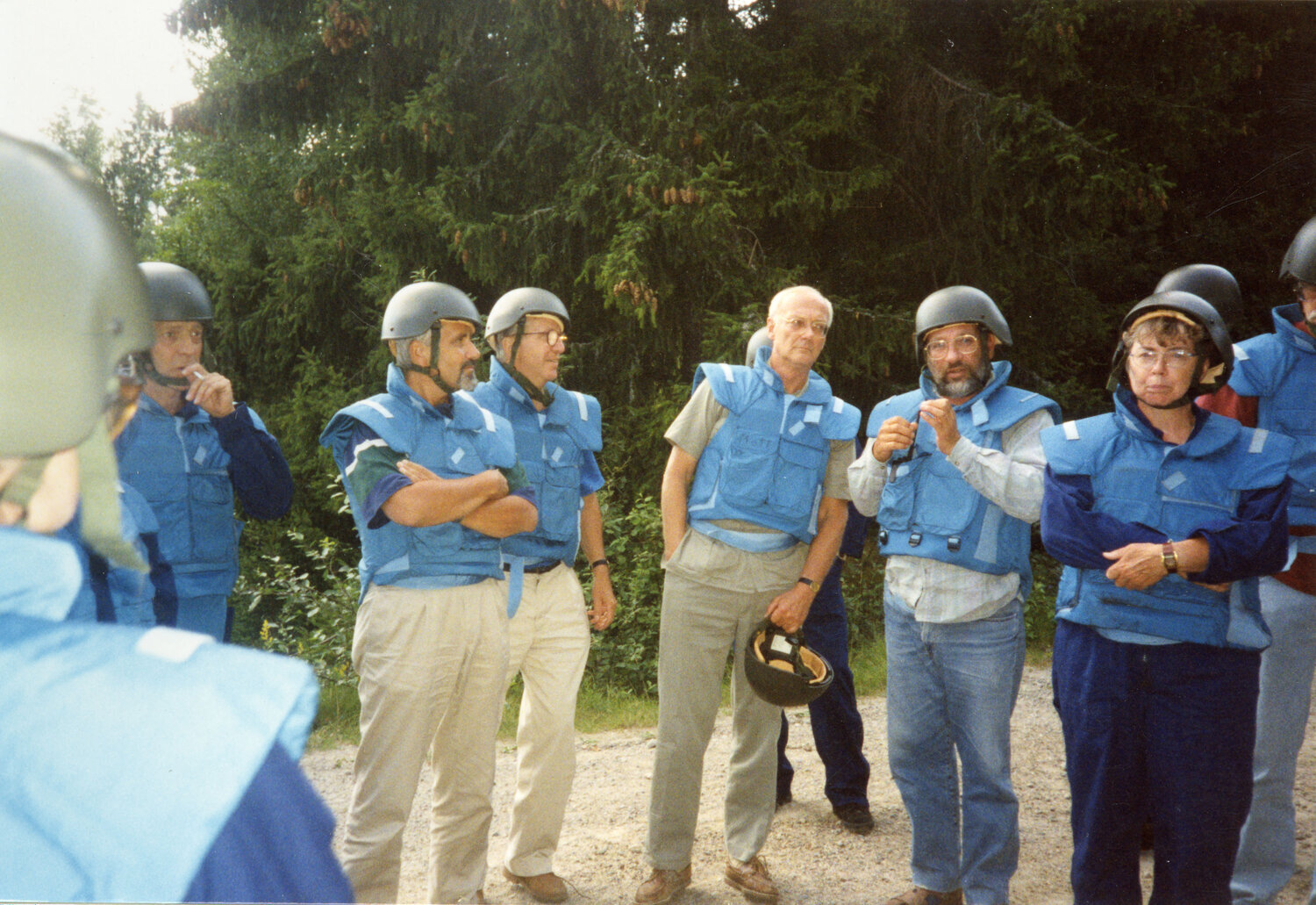
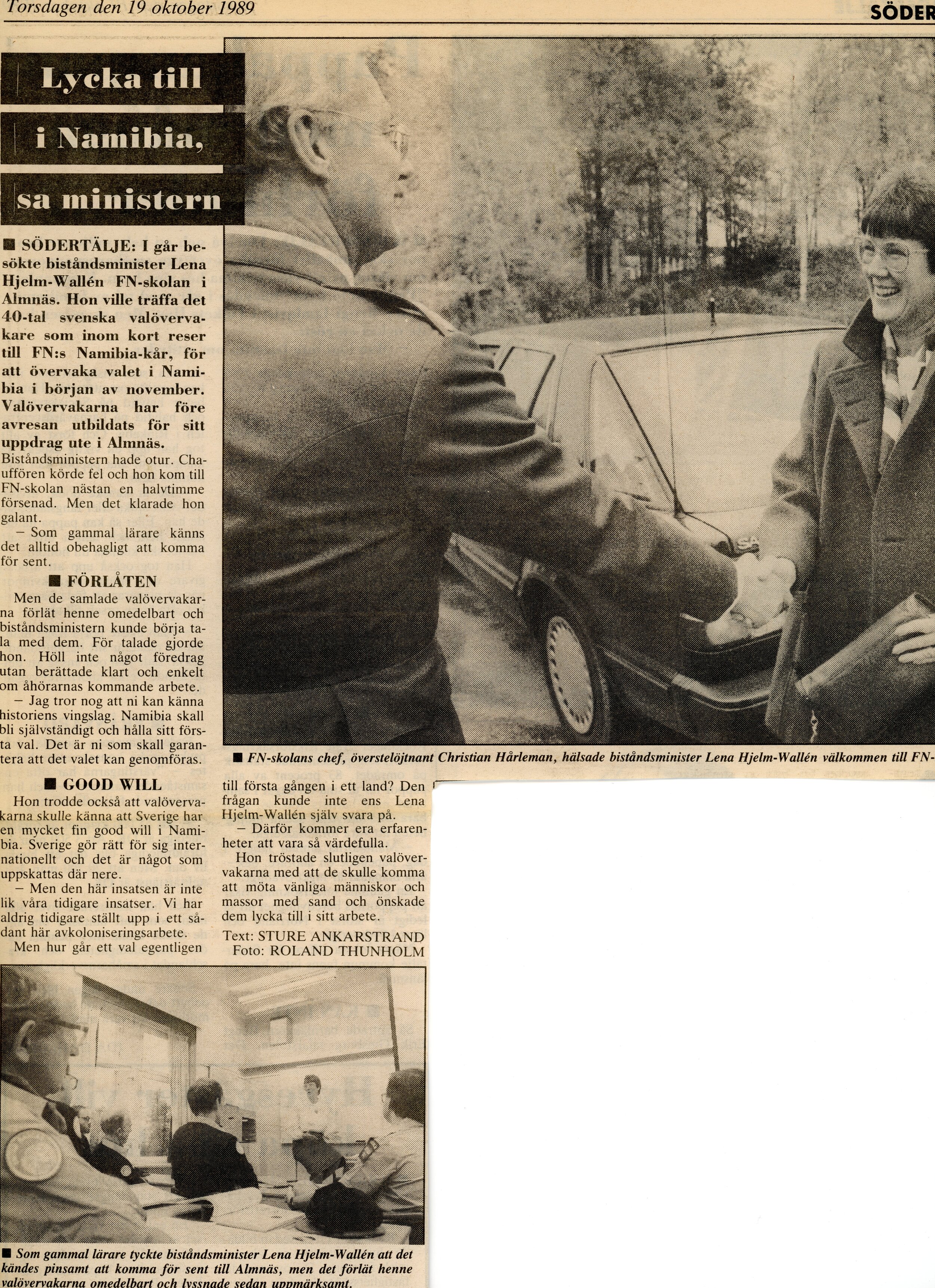
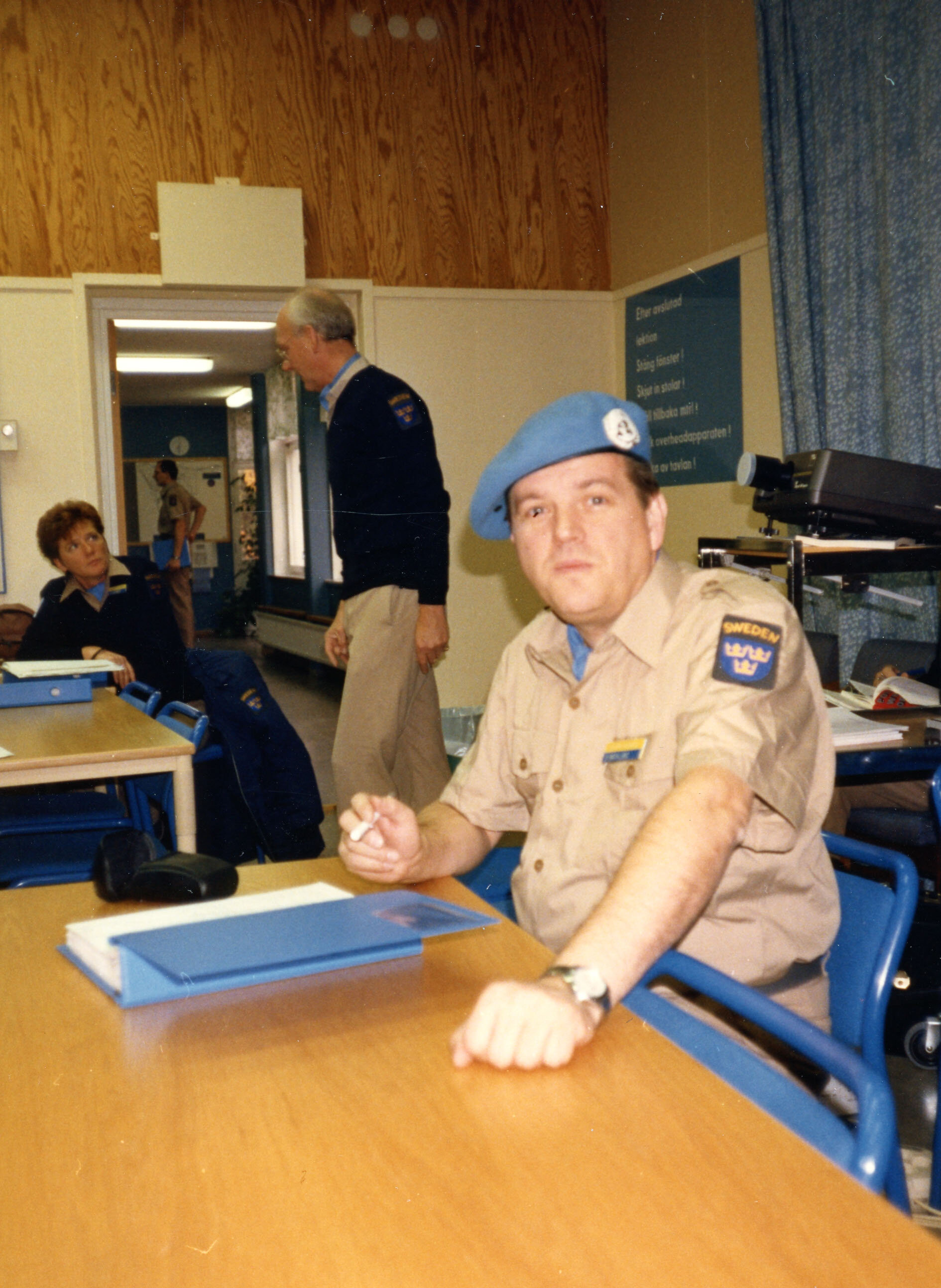
The UN Training School at Almnäs. Photo: Gunder Söderbäck and Stellan Bäcklund.
Åkerblom continues in her diary, describing the reception they received upon arrival:
“28 October 1989: Finally, we arrived in Windhoek, the capital of Namibia. At the airport, we were welcomed by Danish UN personnel, who professionally guided us through our introduction to the world of the UN and UNTAG: first photographs, then identity cards, followed by the issue of field equipment and payment of our daily allowances for our time in Namibia. After some waiting, we were informed where we would receive our UN training. Half of the Swedish contingent would be trained in Windhoek, while the other half, including myself, would be trained in Rundu in the far north of Namibia, on the border with Angola. That evening, we all gathered for a party at the home of Lena Sundh, Sweden's representative in Namibia.”
Tord Drugge confirms that the journey from Almnäs to Windhoek took a total of 28 hours and that they received a very warm welcome from the mission upon their arrival in the capital. According to Drugge, it quickly became clear that the mission did not want them to wear uniforms. Instead, they were expected to wear civilian clothes throughout their assignment.
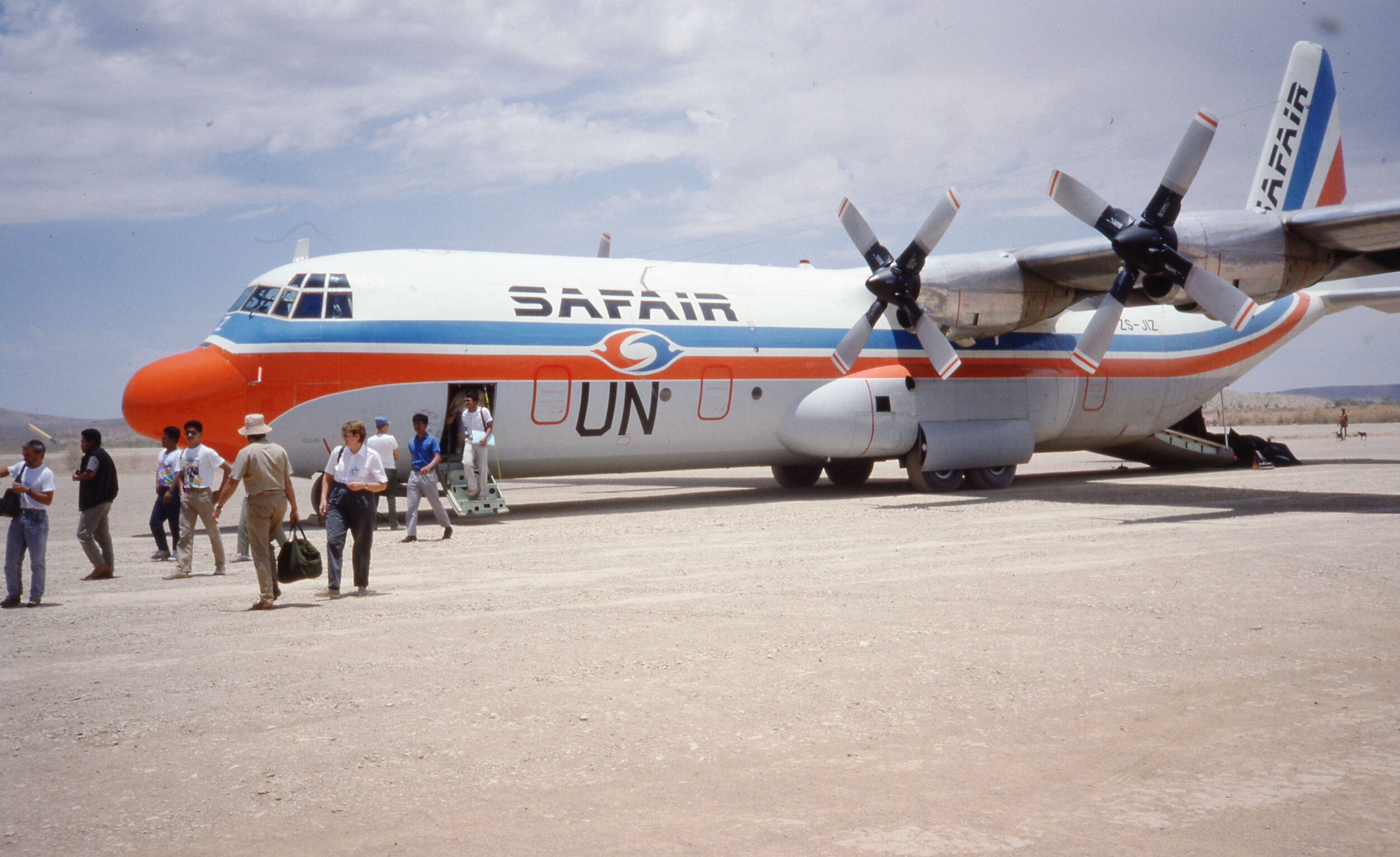
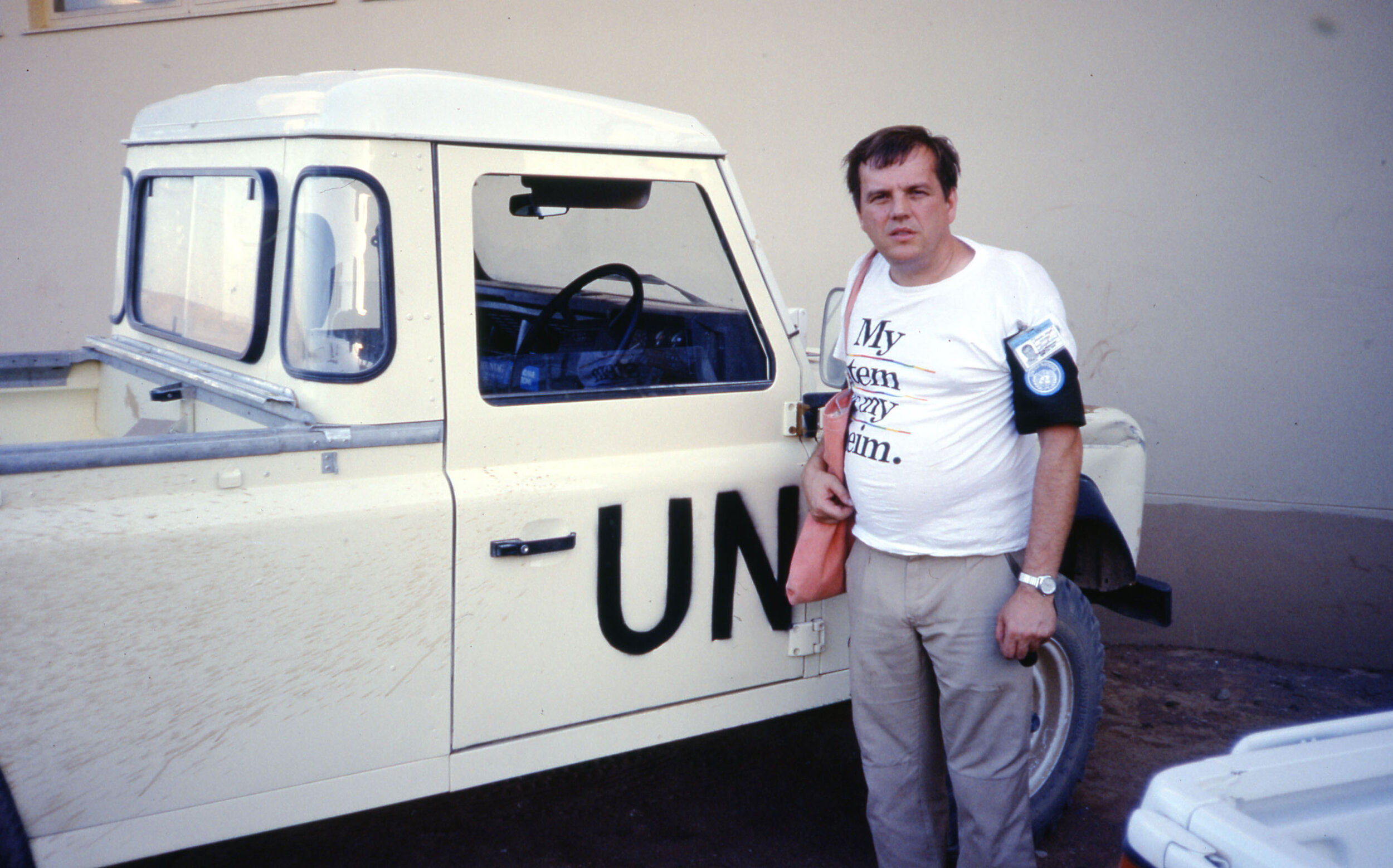
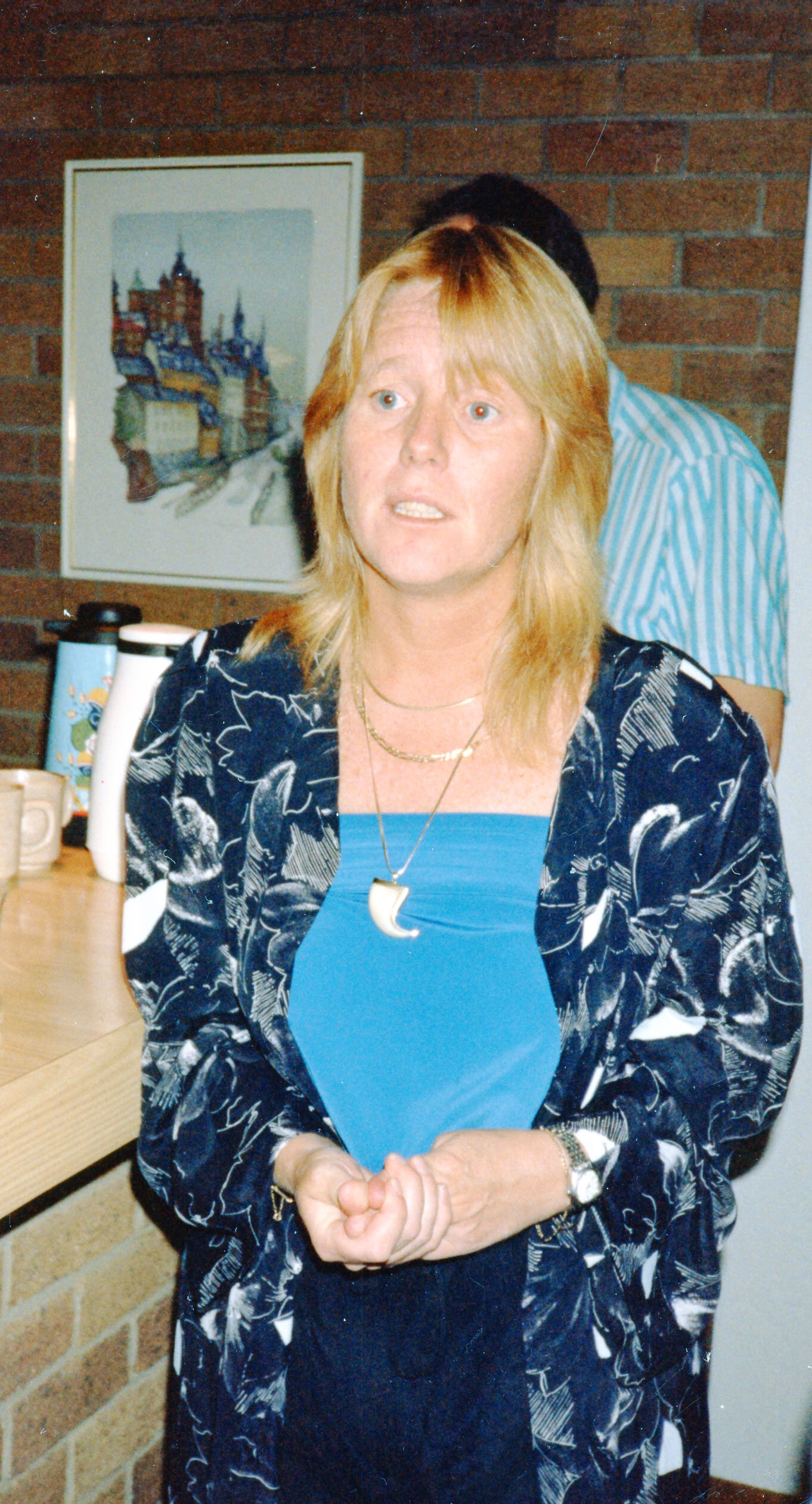
The reception in Windhoek, Namibia. Photos: Stellan Bäcklund.
The Swedish election observers were evenly divided between the north-western and north-eastern parts of the country, close to the border with Angola. According to Tord Drugge, the election observers were organised into stationary and mobile teams. The former operated in populated areas, while the latter worked in remote, sparsely populated regions.
Drugge further explains that, in addition to a team leader, each team consisted of an election observer, a police officer and a military officer from widely differing countries, as well as a local interpreter. Tord Drugge and Jörgen Backlund were among the Swedes appointed as team leaders. Tord was responsible for a stationary team, while Jörgen led a mobile team.
Swedish election observer Bosse Hammarström describes the journey from Windhoek to his assigned area of operations in the north in his diary:
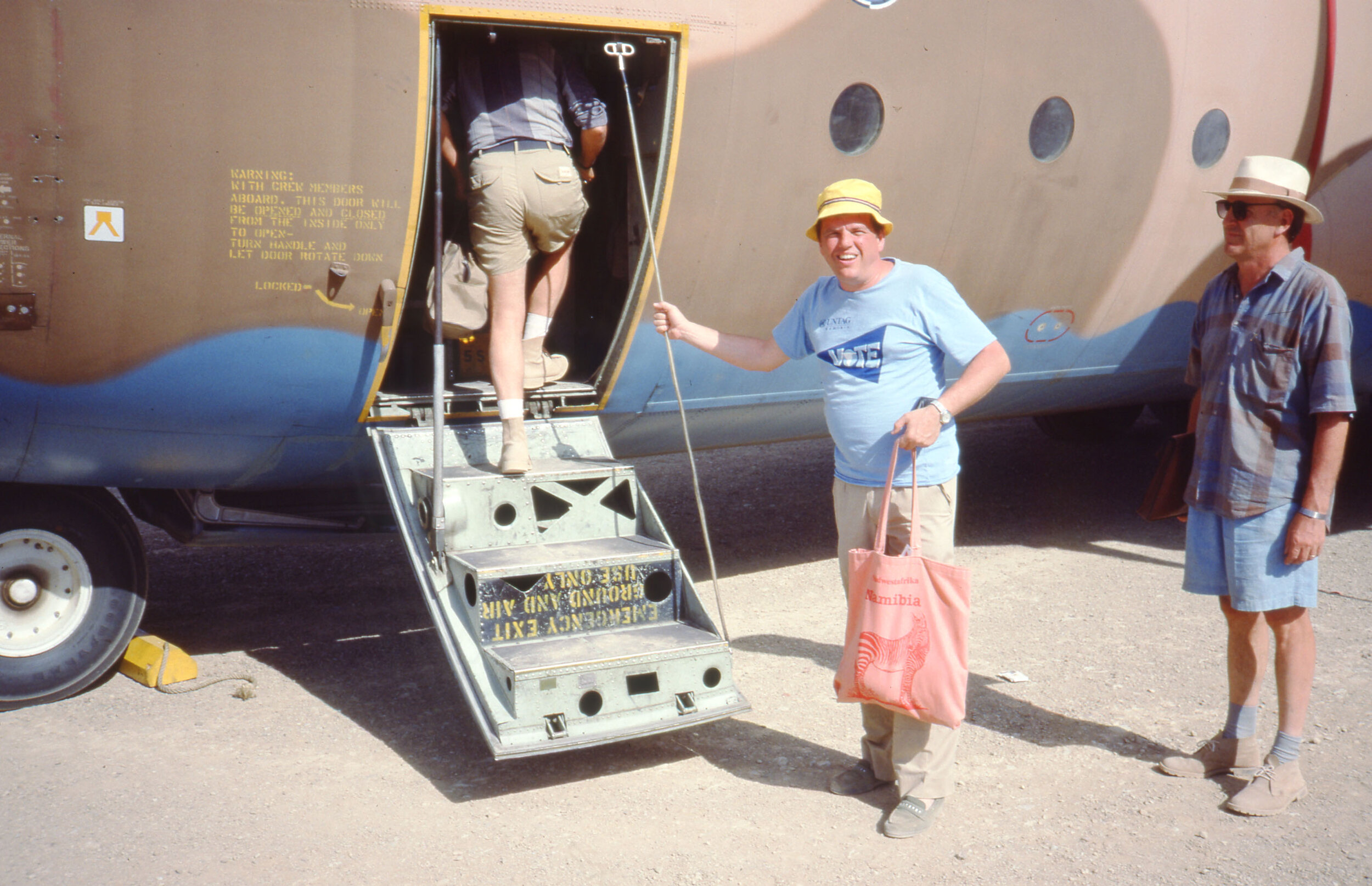
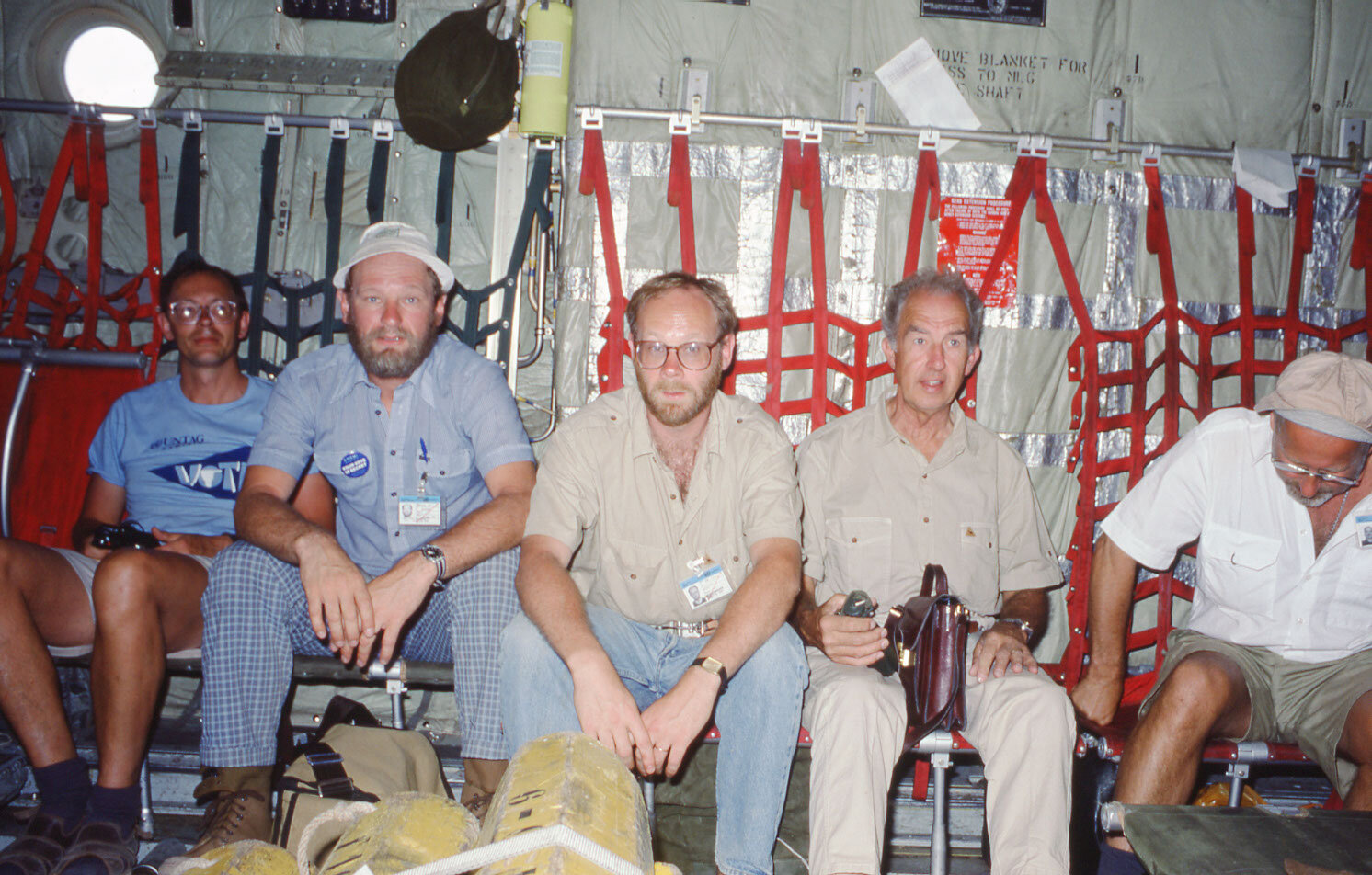
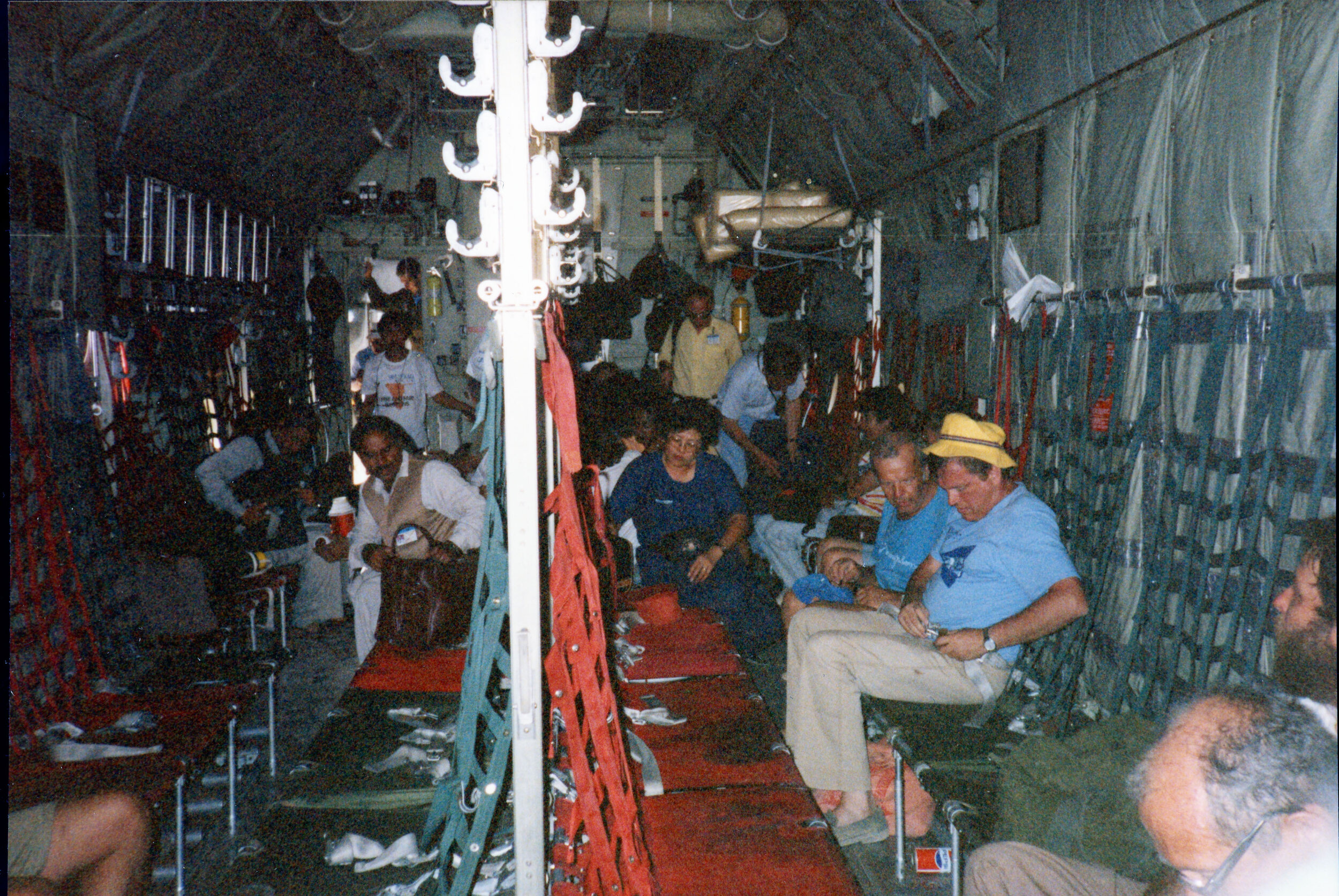
Photos: Lars Nopp, Stellan Bäcklund and Jörgen Backlund.
“Saturday, 4 November 1989: It is quarter past twelve, and I am sitting with almost a hundred other people in a very noisy C-130 Hercules transport aircraft. Most of those on board are Malaysians, Pakistanis and Swedes. We are being flown to a little backwater in the north called Opuwo. There, we will meet the election officials from the South African administration and be provided with vehicles, radios and other equipment. Tomorrow or the day after, we are due to drive to our base, a place called Ombuku. The polling stations are to be open from 0700 to 1200 and again from 1400 to 1900. Between voting sessions and after the polls close, all election materials must be checked and the seals verified by us in UNTAG. Quite how we are going to manage all this work, while also travelling across terrain where there are no roads and somehow finding time to eat, I really cannot imagine. But I suppose it will all work out.”
Hammarström and Drugge, who were stationed in north-western Namibia, describe the first day of voting and the electoral procedures in their diaries:
Hammarström: “First day of voting, Tuesday, 7 November 1989: Up at the crack of dawn at our tented camp. We immediately set about preparing the polling station beneath a couple of trees. Imagine our surprise when the voters arrived at exactly 0700! We had not quite finished all the paperwork, recording seal numbers, ballot-paper booklet numbers and so on. Everything has to be done twice: once by the administration and once by UNTAG. Anyway, by around 0730, things were running smoothly. Almost all the voters were nomads wearing their traditional clothing. They were also unable to read or write, which made the voting procedure somewhat more complicated.”
Drugge – “First day of voting, woke up at around 0500 after a reasonably good night's sleep. Had a shower in the excellent trailer provided by UNTAG, which also has toilets and washing facilities. Election day began with the sealing of the various ballot boxes and the completion of the corresponding records. The actual voting process did not begin until 0745. Many Himba people passed through, their bodies covered in goat fat and ochre. The women were bare-breasted. The day went by fairly quickly. After 1700, the queues began to thin out. At 1900, the polling stations closed. We then began sealing the ballot boxes and completing the necessary documentation. Finally, the daily report was transmitted by radio to the district centre in Opuwo.”
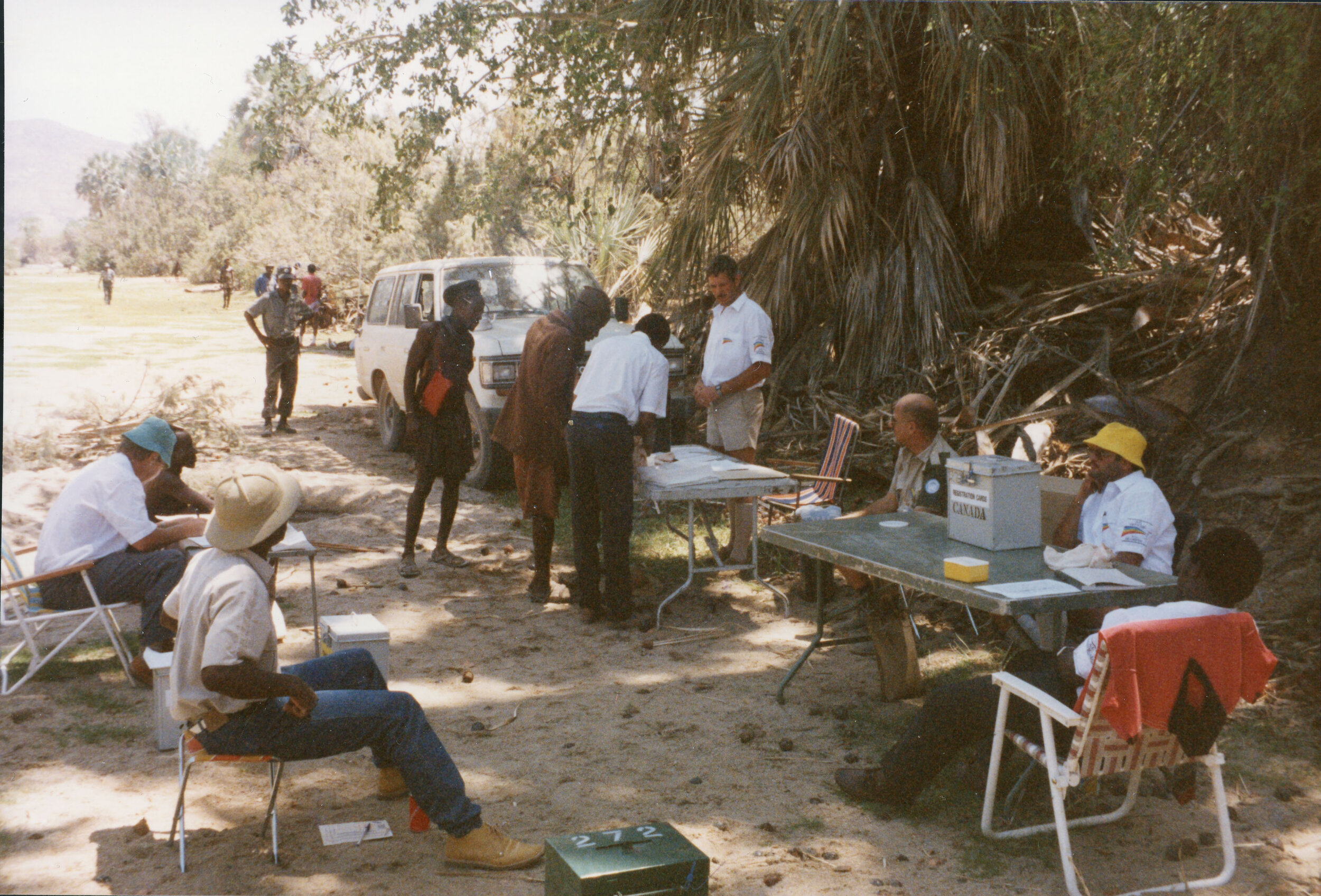
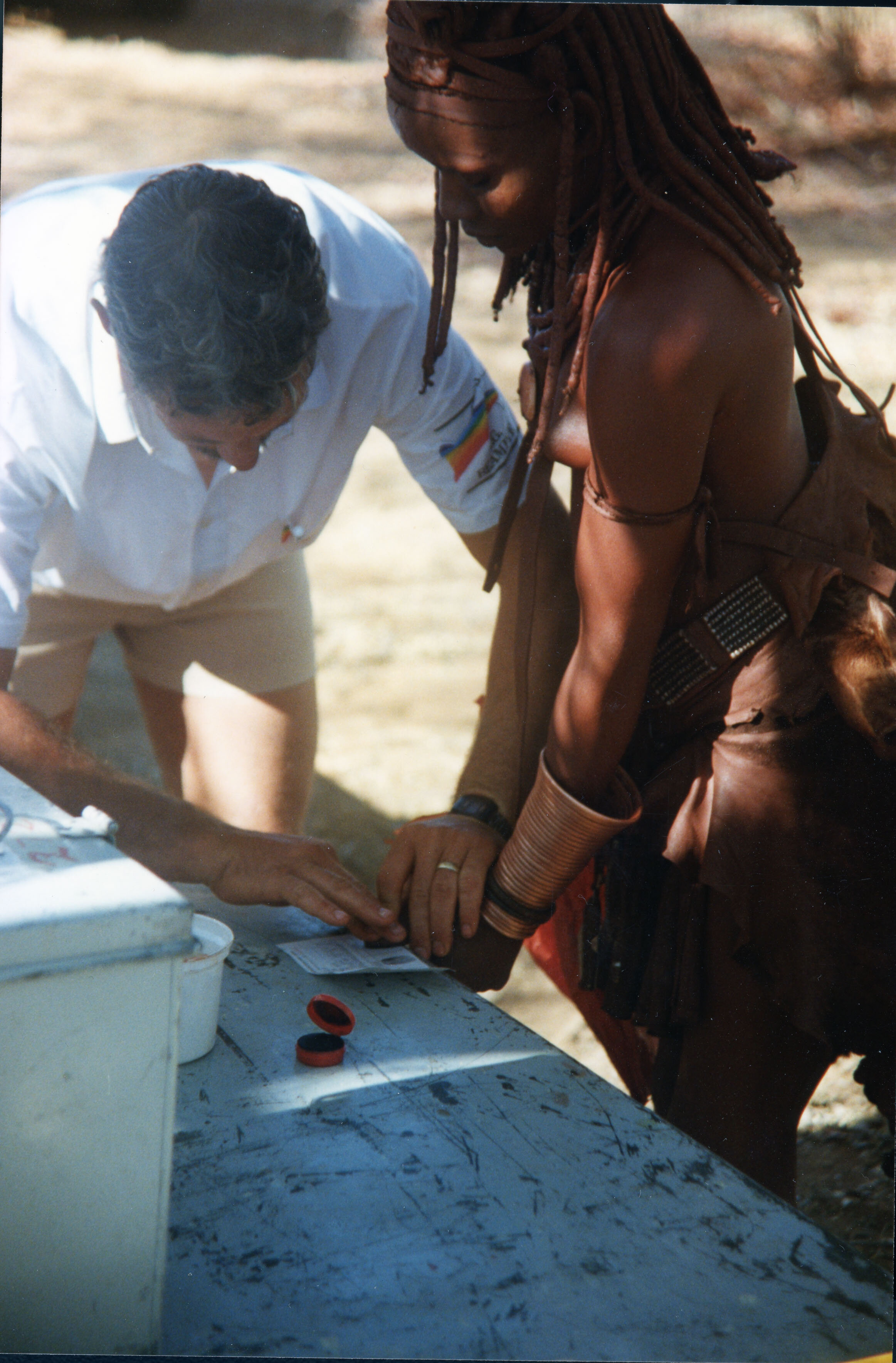
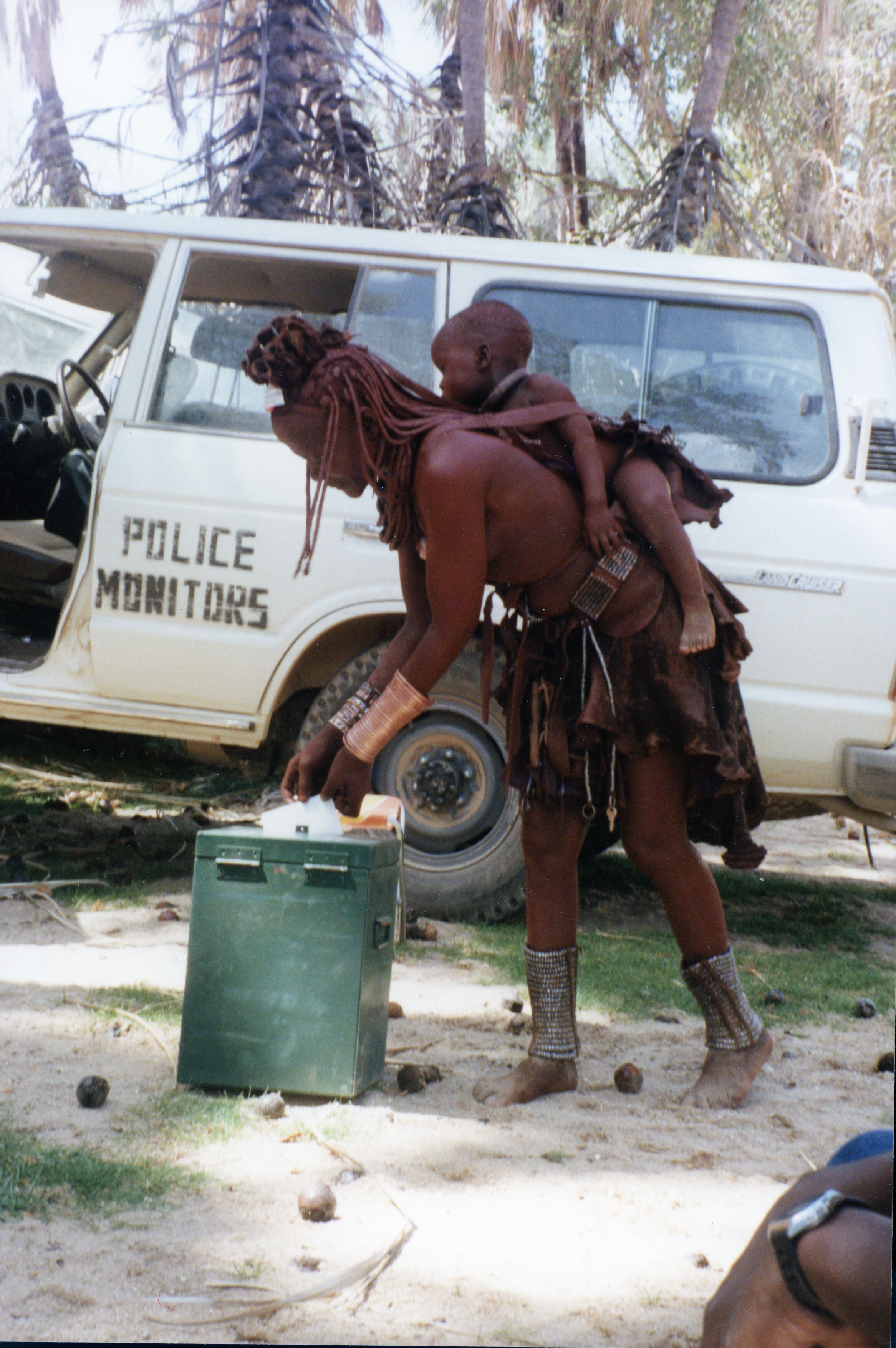
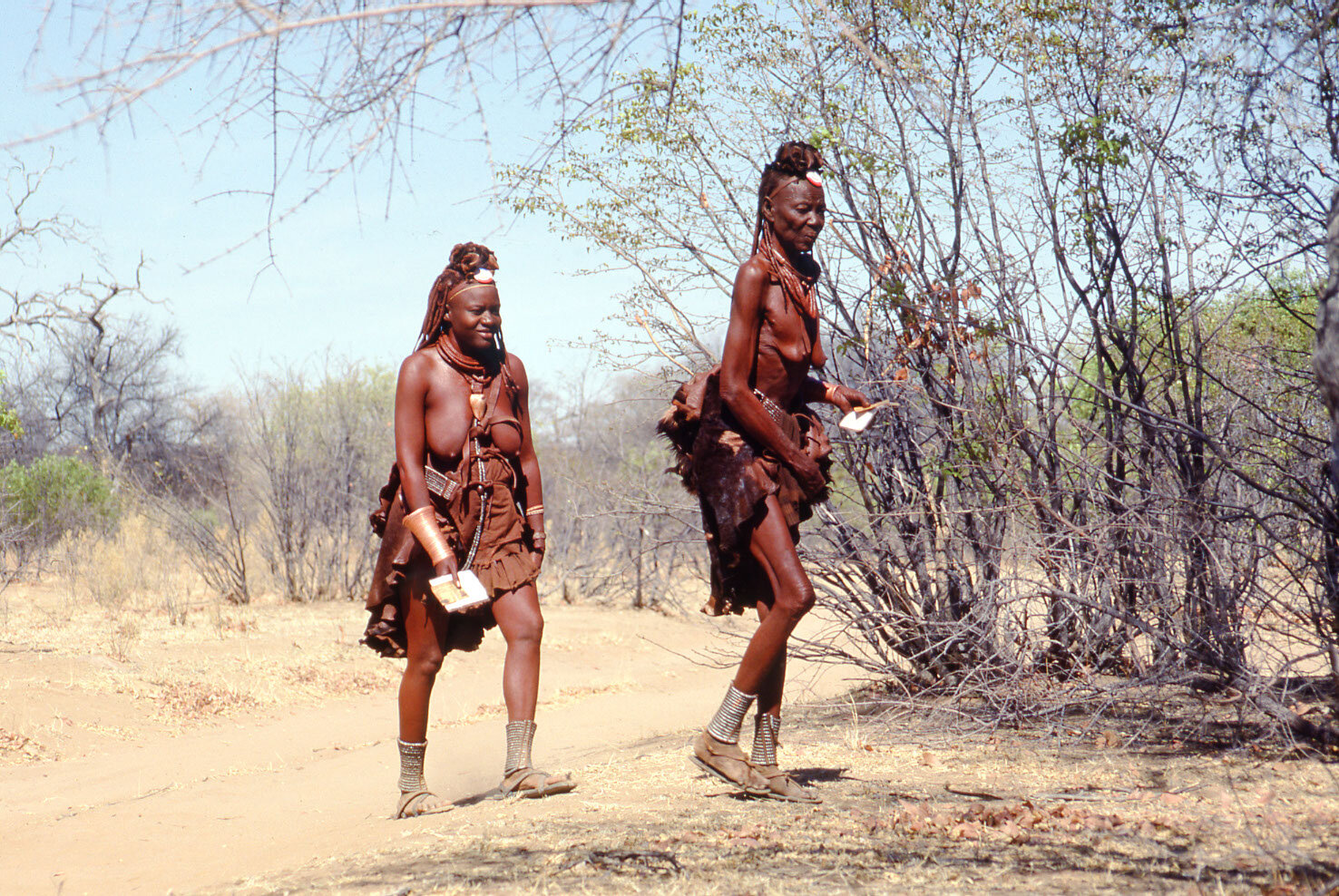
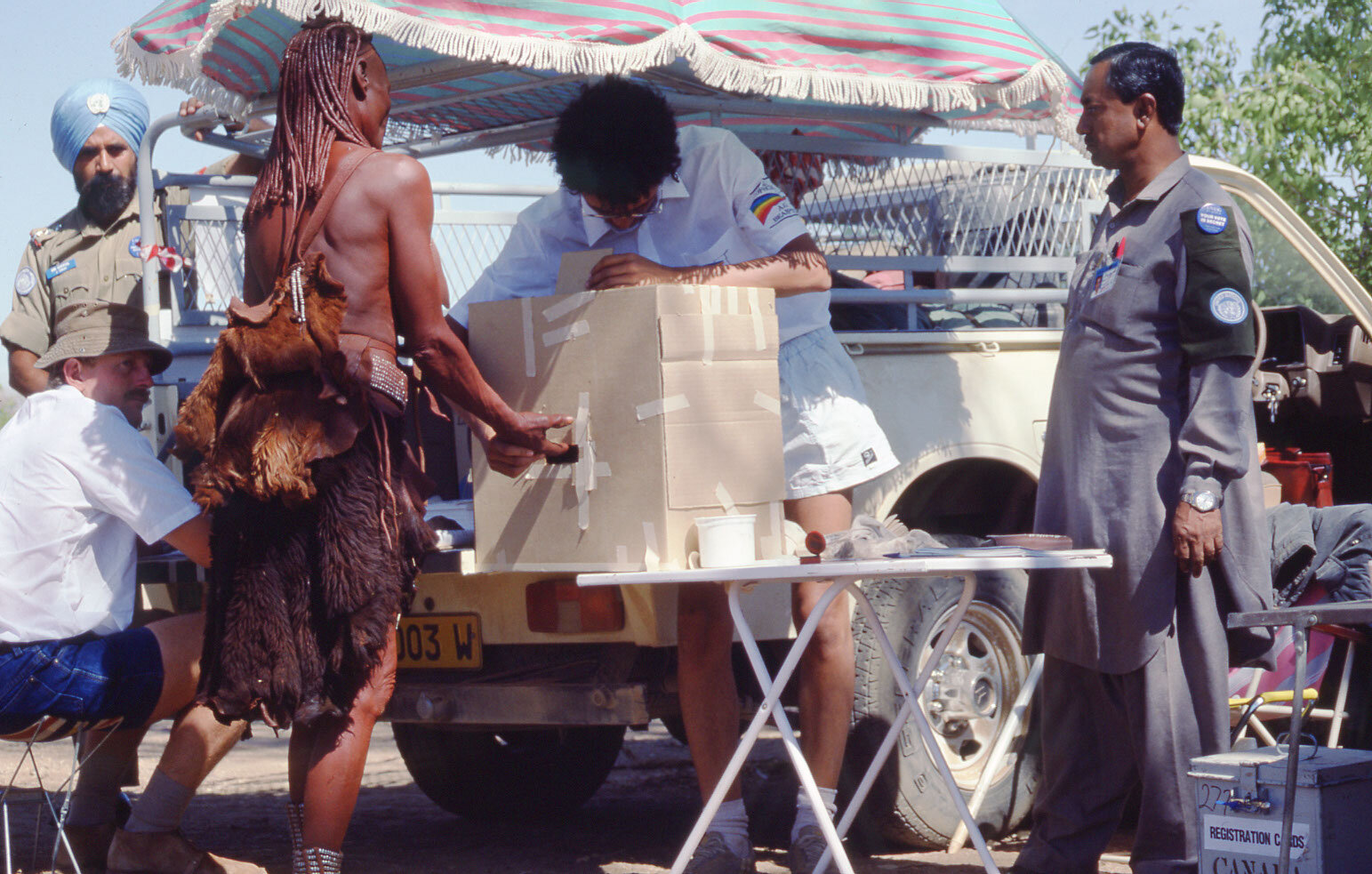
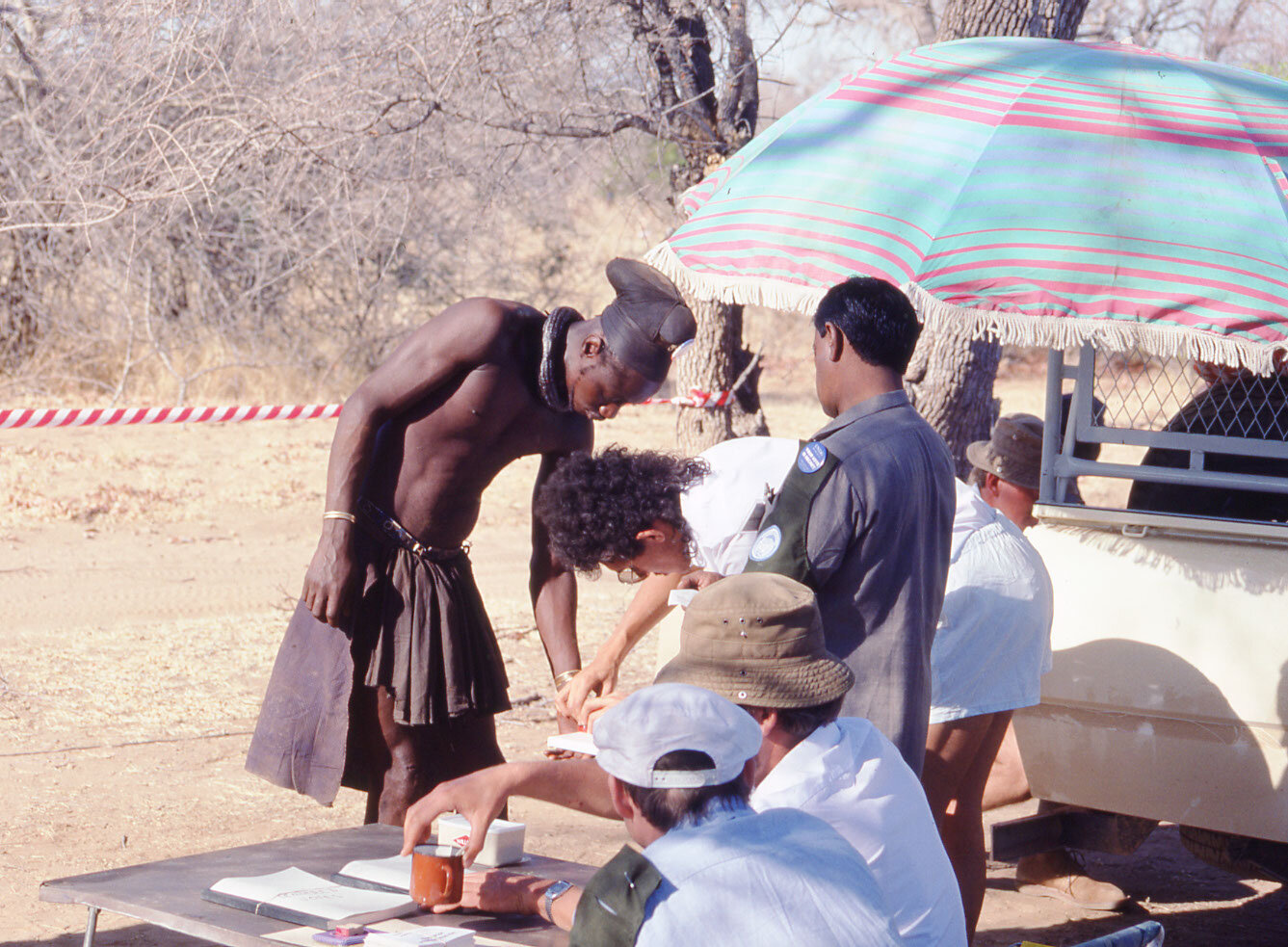
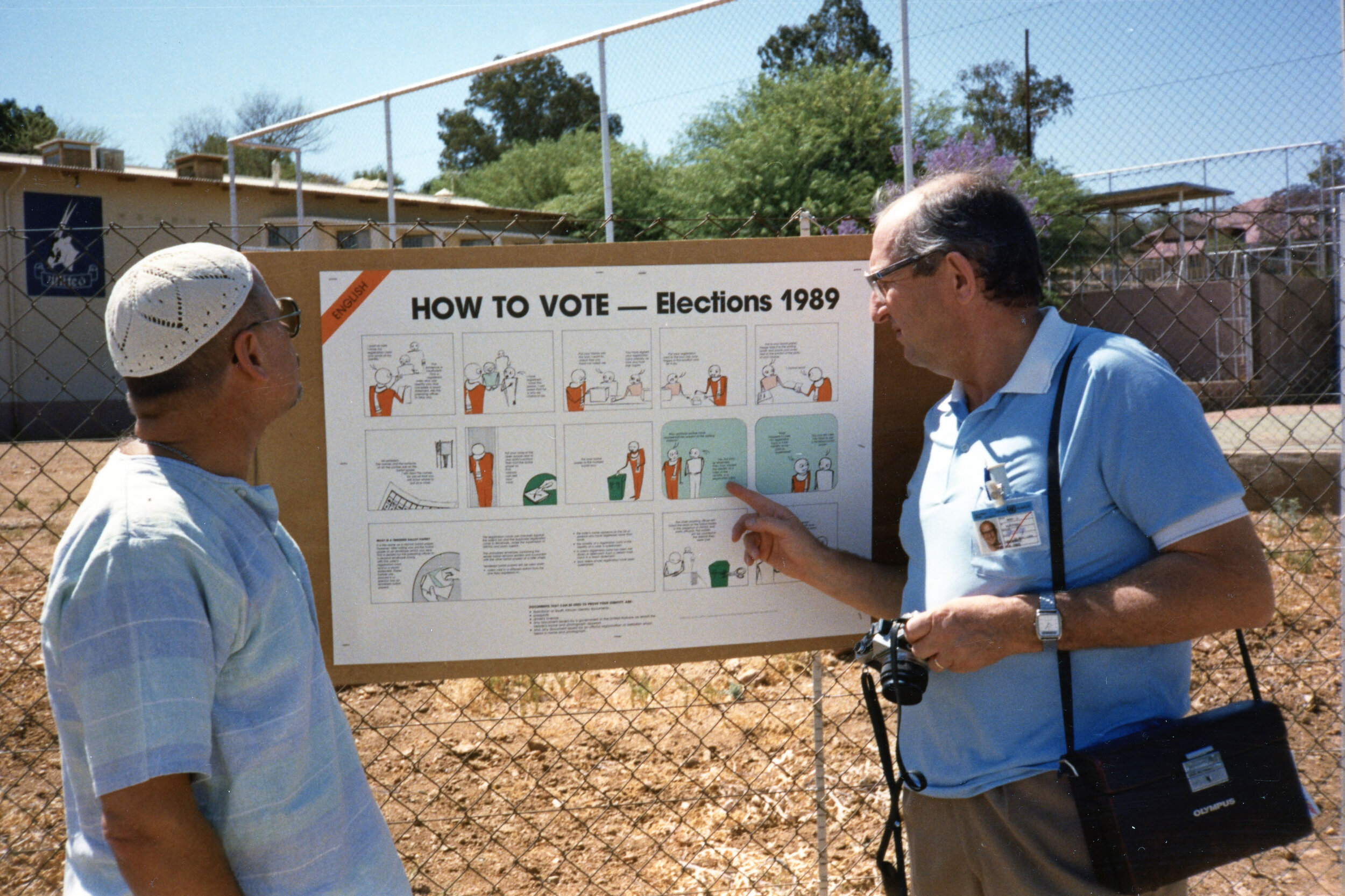
Voting in north-western Namibia. Photos: Lars Nopp, Stellan Bäcklund and Jörgen Backlund.
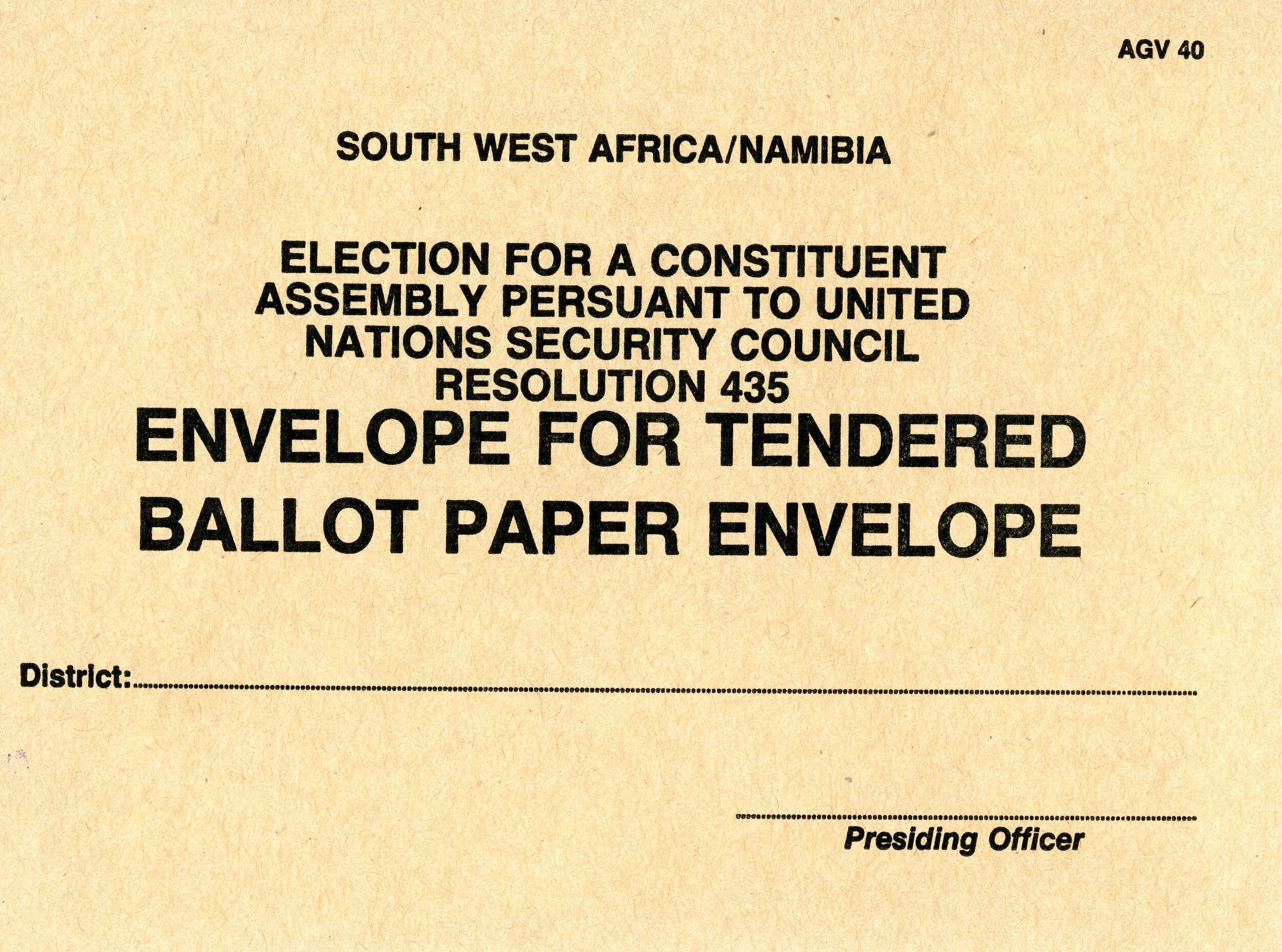
Hammarström: “Voters are required to present both a voter registration card and an identity card. If either or both of these documents are missing, they must still be allowed to vote, but under a special procedure. Many people arrived with their voter registration cards but without any form of identification.
First, they have to place their hand inside a box containing a lamp that reveals fluorescent dye — rather like the ultraviolet lamps used at public dances. Next, we check whether their names appear on a list of people who have registered more than once. As many lacked identity documents, we had to find someone with an identity card who could confirm that the person concerned was who he or she claimed to be. The voter then hands over their registration card, which is placed in a special box.
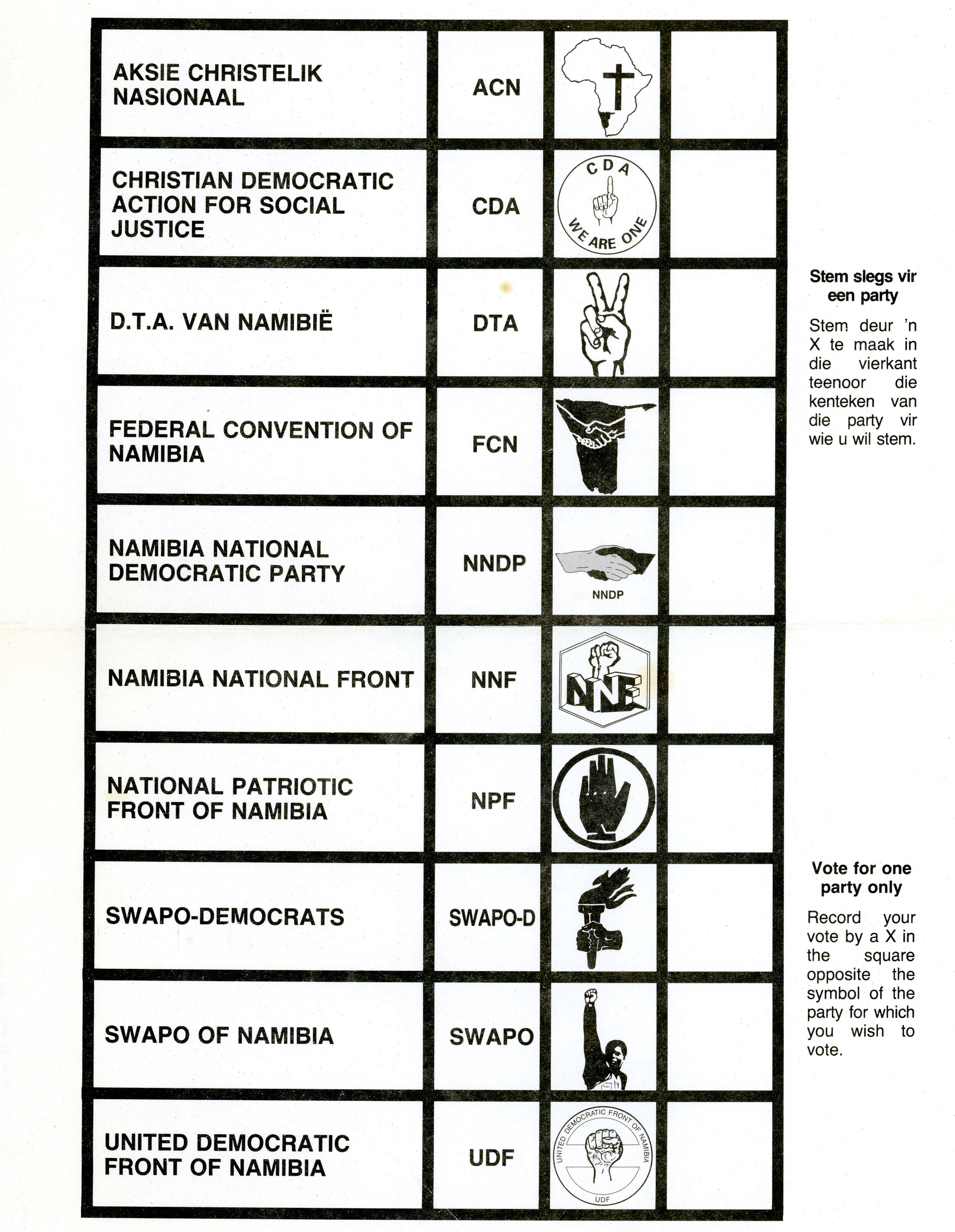
Next, they place their knuckles inside a box containing the fluorescent dye. Their thumb is then marked with dye, and they receive a stamped ballot paper listing all ten political parties, with each party's name, abbreviation and symbol on a separate line. They then go behind a wooden screen, mark the ballot paper with their thumbprint, fold it and place it in the green ballot box. After approximately two hours, we had processed the entire village — around fifty people.
It is not easy to describe what we are experiencing here. Try to imagine an ordinary election combined with a military exercise for army rangers and the Paris–Dakar Rally.”
Åkerblom, who was stationed in the more urbanised north-eastern part of the country, describes her impressions of the first day of voting:
“The first day of voting! An extraordinary sight greeted us when we arrived at the school in Shadikongoro, northern Namibia, at around 0630 in the morning to observe the election. Several hundred people were sitting in orderly rows: young and old, people who were lame, physically disabled, blind or suffering from leprosy. Most women of childbearing age had a child on their back or at their breast, and many were also pregnant again.”
By digitising the memories and materials of Swedish civilian election observers from various international missions, Fredsarkivet helps to highlight and broaden perspectives on Sweden’s role in international peacekeeping processes.


Quisque iaculis facilisis lacinia. Mauris euismod pellentesque tellus sit amet mollis.