

THE EARLY DAYS IN PAPHOS
In the spring of 2020, Fredsarkivet (the Swedish Peace Archives) welcomed its first-ever intern. My name is Sofia, and I have been given this wonderful opportunity. I am extremely grateful to be able to explore and help share so many personal experiences.
As Sweden's contribution to the peacekeeping mission in Cyprus is being commemorated on Veterans Day this year, I will be focusing particularly on this mission throughout the spring. In this first article, I intend to introduce UNFICYP and briefly describe what life was like for the first Swedish peacekeepers to arrive on the island.
Following violent clashes between the Greek Cypriot and Turkish Cypriot communities on Cyprus, UN Secretary-General U Thant made the decision on 4 March 1964 to establish UNFICYP. The United Nations Peacekeeping Force in Cyprus was tasked with preventing further fighting between the divided communities and maintaining peace — a mission that would prove to be exceptionally prolonged, violent and distressing.
Sweden was mentioned as a potential contributor to UNFICYP as early as January 1964, during the initial discussions about international intervention in Cyprus. The Greek Cypriot president, Archbishop Makarios III, wanted to ensure that any intervening force would remain neutral in the conflict, and he considered Sweden, for example, capable of fulfilling this requirement.
Furthermore, Sweden had already established a reputation for the exceptional competence of its peacekeeping troops through its earlier missions in Gaza and the Congo.
Consequently, the first Swedish battalion, XXIVC, consisting of a total of 953 men, was assigned to the most troubled region of the island: the western zone of Paphos.
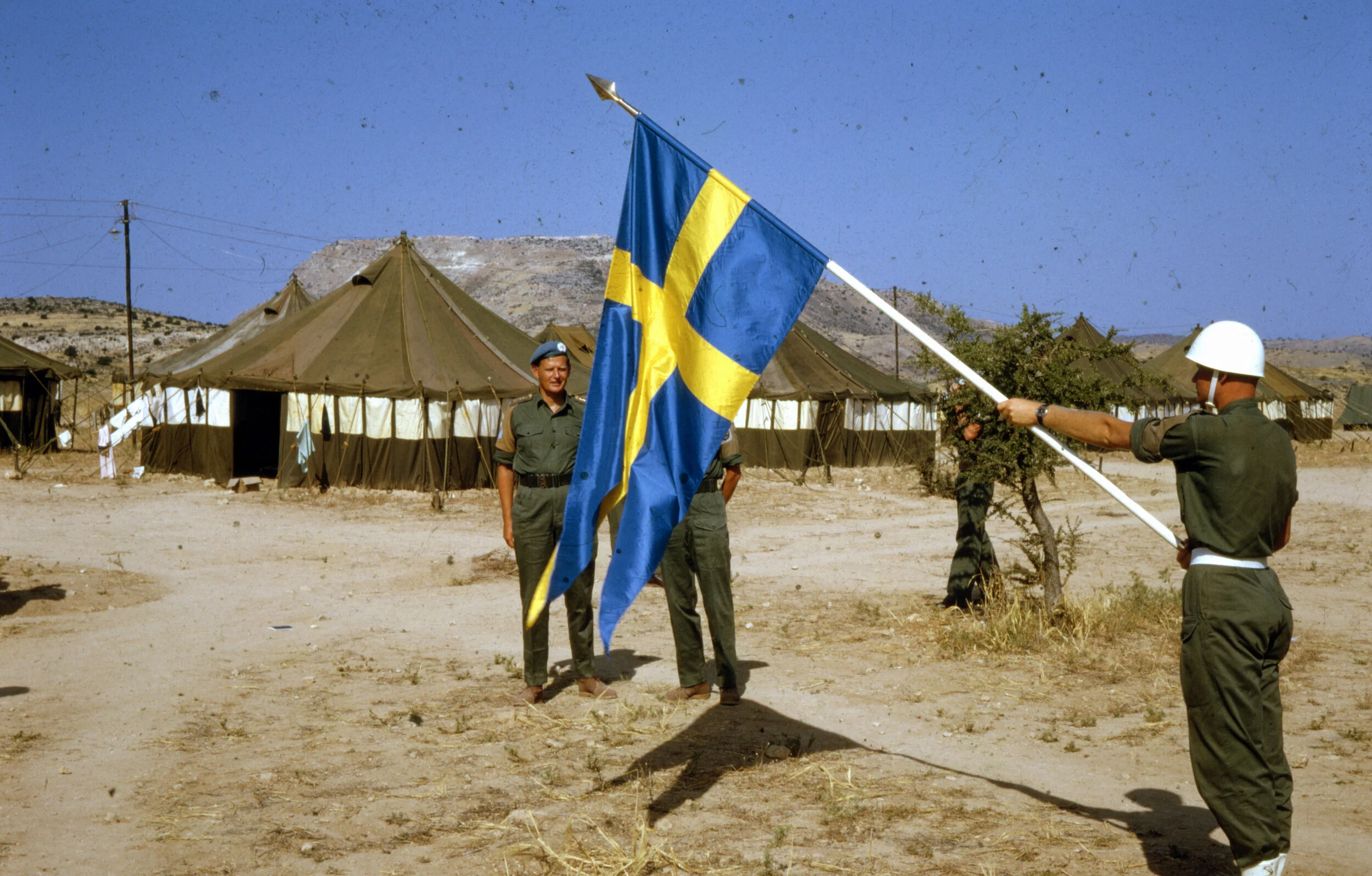
Photo: Folke Friske
During their time in Paphos, the Swedish battalion was accommodated in tents and relied on the British Sovereign Base Areas for logistical support.
The battalion commander, Colonel Jonas Waern, who had previously served as a brigade commander with the UN forces in the Congo, divided the battalion into three areas.
One company was stationed in Paphos/Ktima, another in Polis, and two companies in Xeros/Lefka. The headquarters and support company was stationed between Xeros and Lefka, while battalion headquarters was established in Xeros.
In the photograph below, we can see three Swedish UN peacekeepers posing in front of their tent in Ktima.
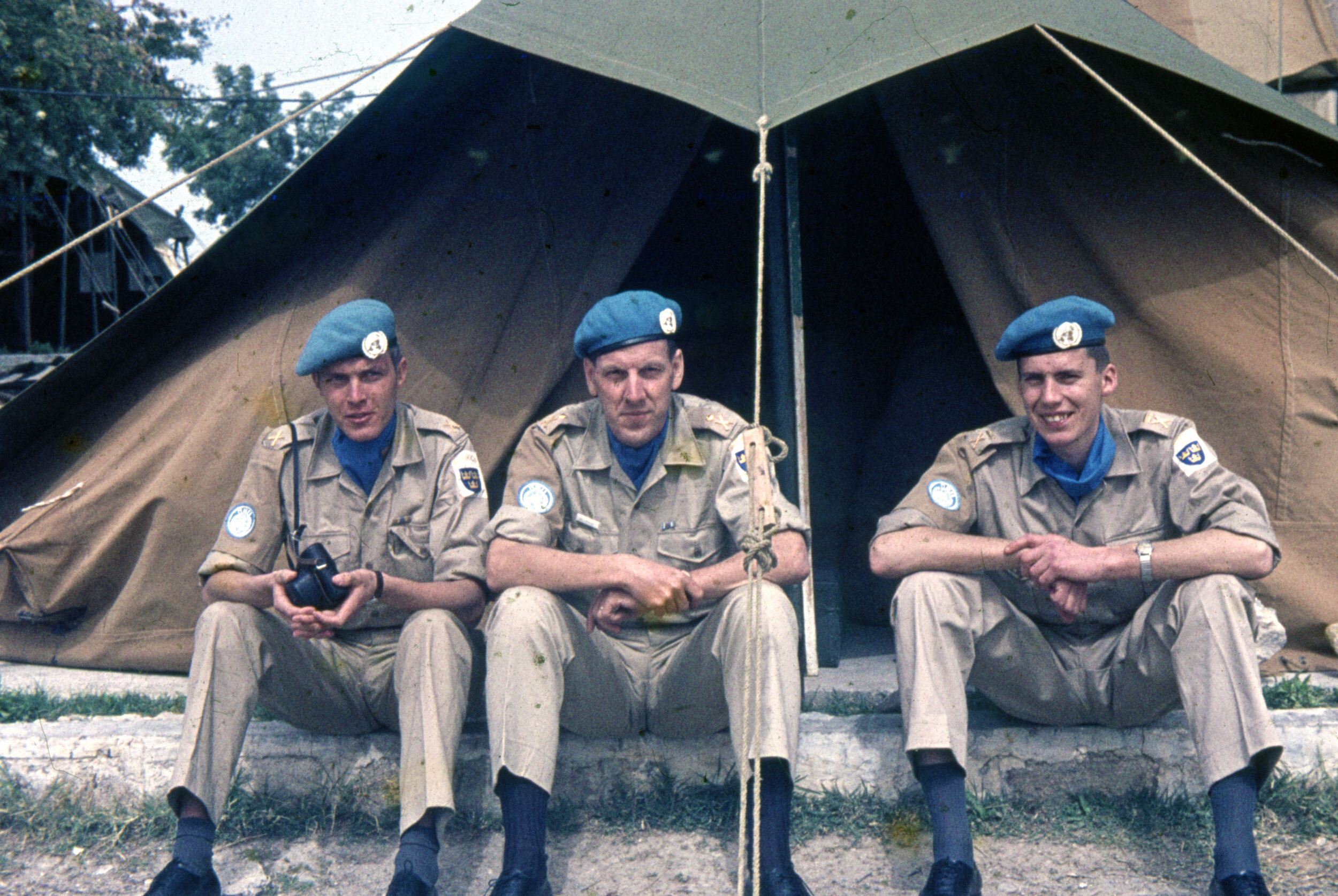
Photo: Folke Friske
The assigned district was, as previously mentioned, extremely unstable. "A tough assignment," as Lieutenant General Prem Singh Gyani, the UN Secretary-General's Personal Representative for Cyprus, described it during the meeting at which the deployment was decided.
The terrain was mountainous, and the Swedish radio equipment was not at all suited to such conditions. Furthermore, the roads were in very poor condition, lacking both guardrails and paved surfaces. There was only one proper road, which bypassed the entire massive mountain range and wound its way along the coast.
The difficult terrain and unreliable radio communications meant that the ability to communicate left much to be desired, naturally making the peacekeeping mission even more challenging.
Here we can see a Swedish soldier on patrol in the Kyrenia Mountains.
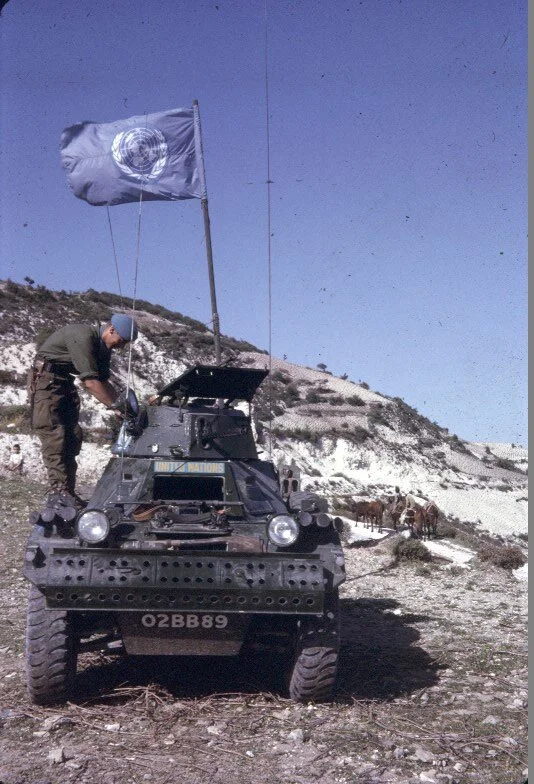
Photo: Folke Friske
The missions varied from escort and observation duties to armed defence against direct attacks. A soldier serving with Battalion XXIVC recounts an incident in which he and a fellow soldier came under fire on Midsummer's Day in 1964. They were positioned in a field near a valley, observing Turkish Cypriot women harvesting root vegetables.
Shortly before the incident, a photograph was taken of a seemingly carefree, bare-chested soldier who, unaware of the danger lurking just around the corner, smiles at the camera. The caption beneath the photograph reads: "Sjögren on the morning of Midsummer's Eve, 1964, when he and I came under fire from Greek Cypriots right here. The photograph was taken shortly beforehand."
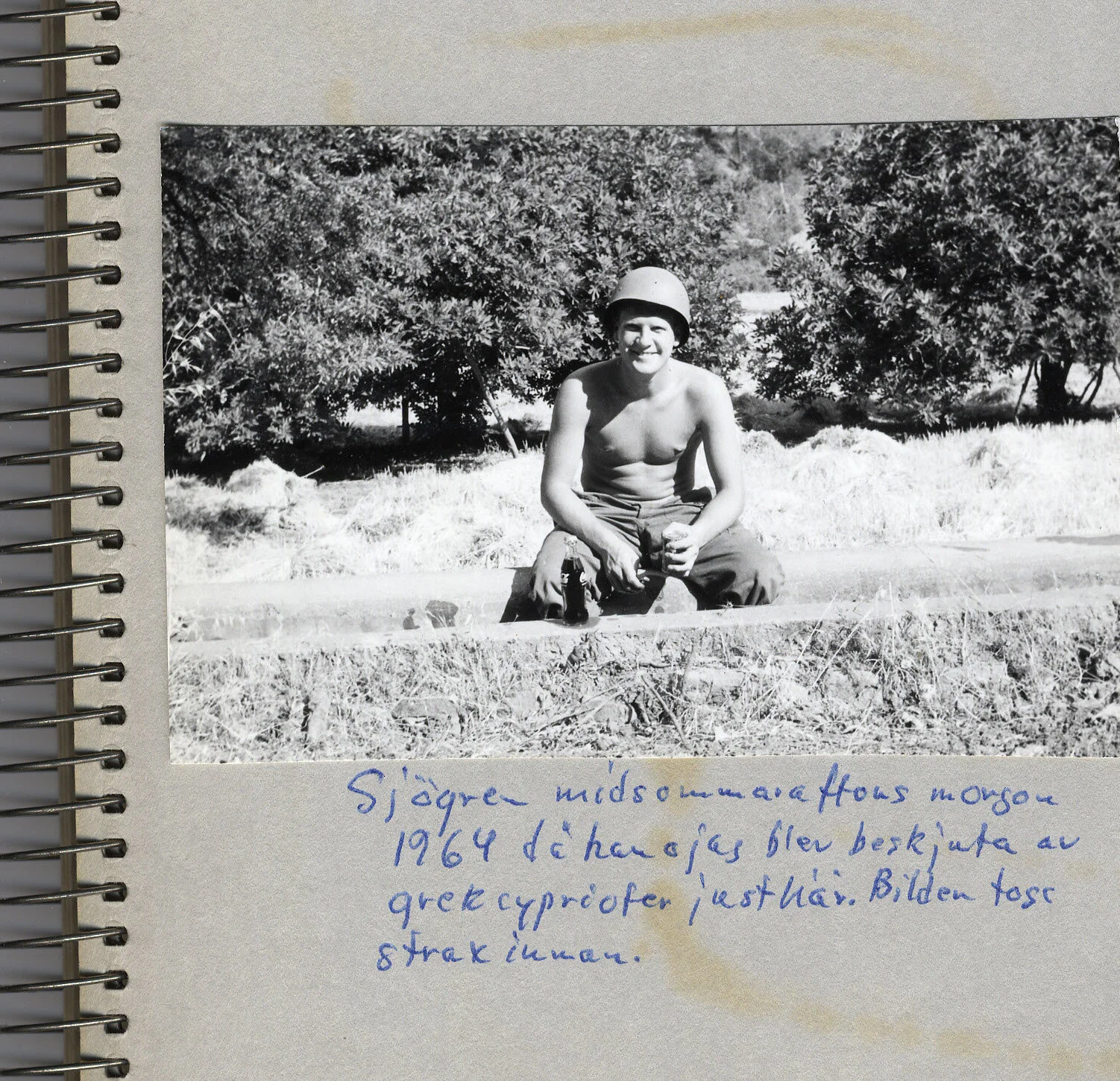
Photo: Lars Frost
The Swedish peacekeeping mission in Cyprus stands out in several respects. It was the first Swedish international mission in which women participated and the first to include a civilian police contingent. The Swedish civilian police force, SWEDCIVPOL, remained in Cyprus until 1993, five years after the Swedish military contingent had been withdrawn.
The work of the civilian police force also provided invaluable benefits to the military contingent. Through their presence in villages and their conversations with the local population, the civilian police gathered intelligence that proved useful to the military peacekeepers. Naturally, information flowed in both directions, and the exchange of different perspectives often resulted in productive cooperation.
Several accounts of service with SWEDCIVPOL have been preserved in our veterans' archives, including a story about a kidnapping that took place in a village north of Nicosia.
A Greek Cypriot woman was abducted one evening while tending her herd of goats. She was later found being held captive in a Turkish Cypriot village not far away. The woman knew the people in the village and was found to be in good physical and psychological health.
With the assistance of the civilian police, among others, she was able to return home safely, together with her goats.
The motive behind the kidnapping was never fully established. However, there is reason to believe that a financial dispute between the two villages may have been involved and that the kidnappers had hoped to obtain a ransom for the woman and her herd of goats.
The photograph below captures a moment during a SWEDCIVPOL patrol in the Kyrenia Mountains.
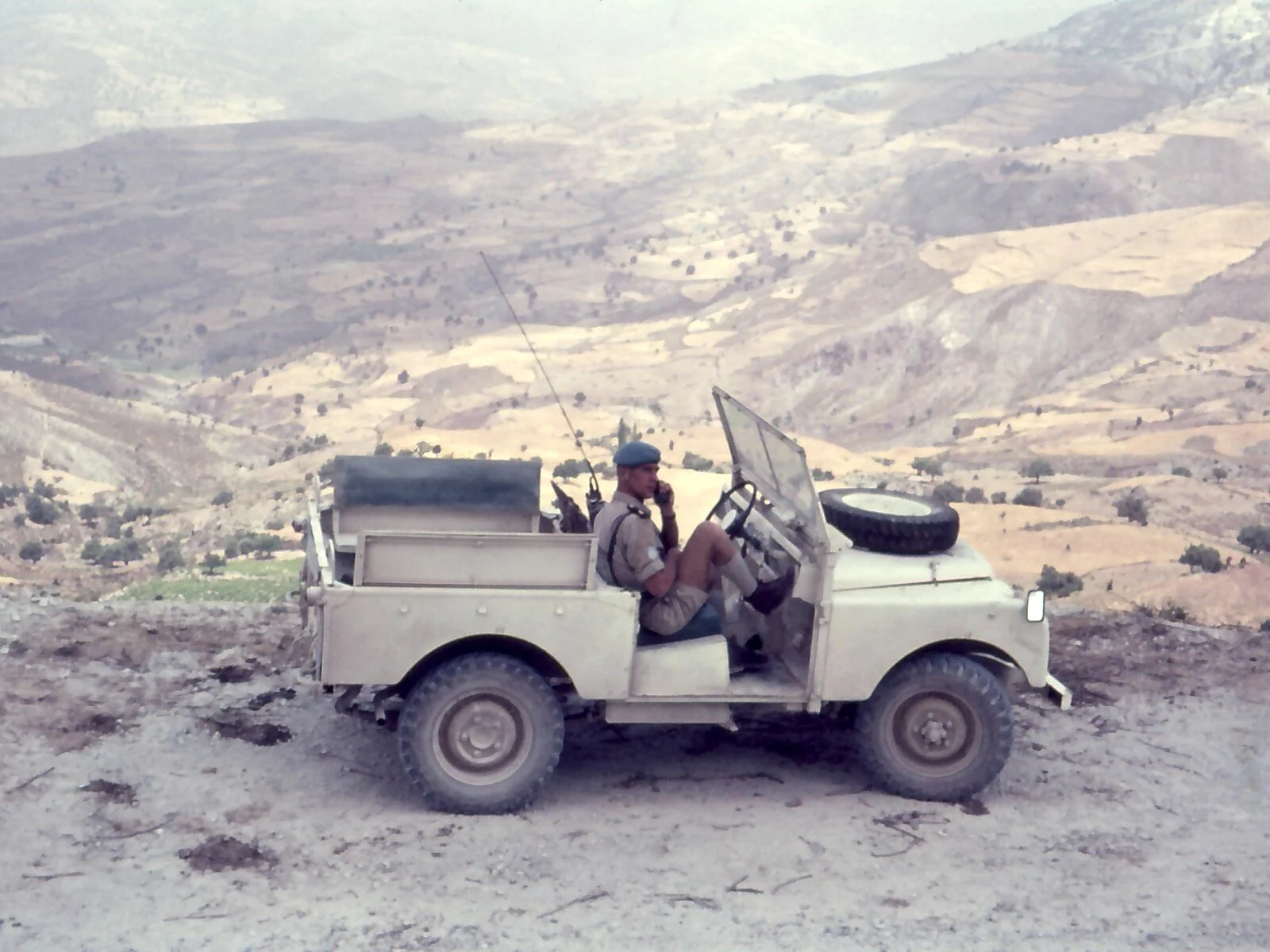
Photo: Tommy Nilsson
During the late summer, the situation for the Swedish peacekeepers in Paphos escalated. Battalion XXVIC, which arrived in July, faced an attack by Greek Cypriot forces in Tillyria, in the northern part of the district. During the ongoing fighting, Swedish soldiers evacuated approximately 300 women and children from villages in the area.
Sweden continued to be involved in the conflict, which gradually developed into an economic blockade of Turkish Cypriot communities in an attempt to starve them into submission. The United Nations broke the blockade in response to the humanitarian crisis that arose as food rations fell to near-starvation levels. Eventually, in mid-September 1964, the Greek Cypriot president lifted the blockade.
This was a hopeful development for the United Nations, but unfortunately, it would prove to be only the beginning of a conflict in which Sweden's involvement would continue for 27 years, making it the country's longest-running UN peacekeeping mission to date.
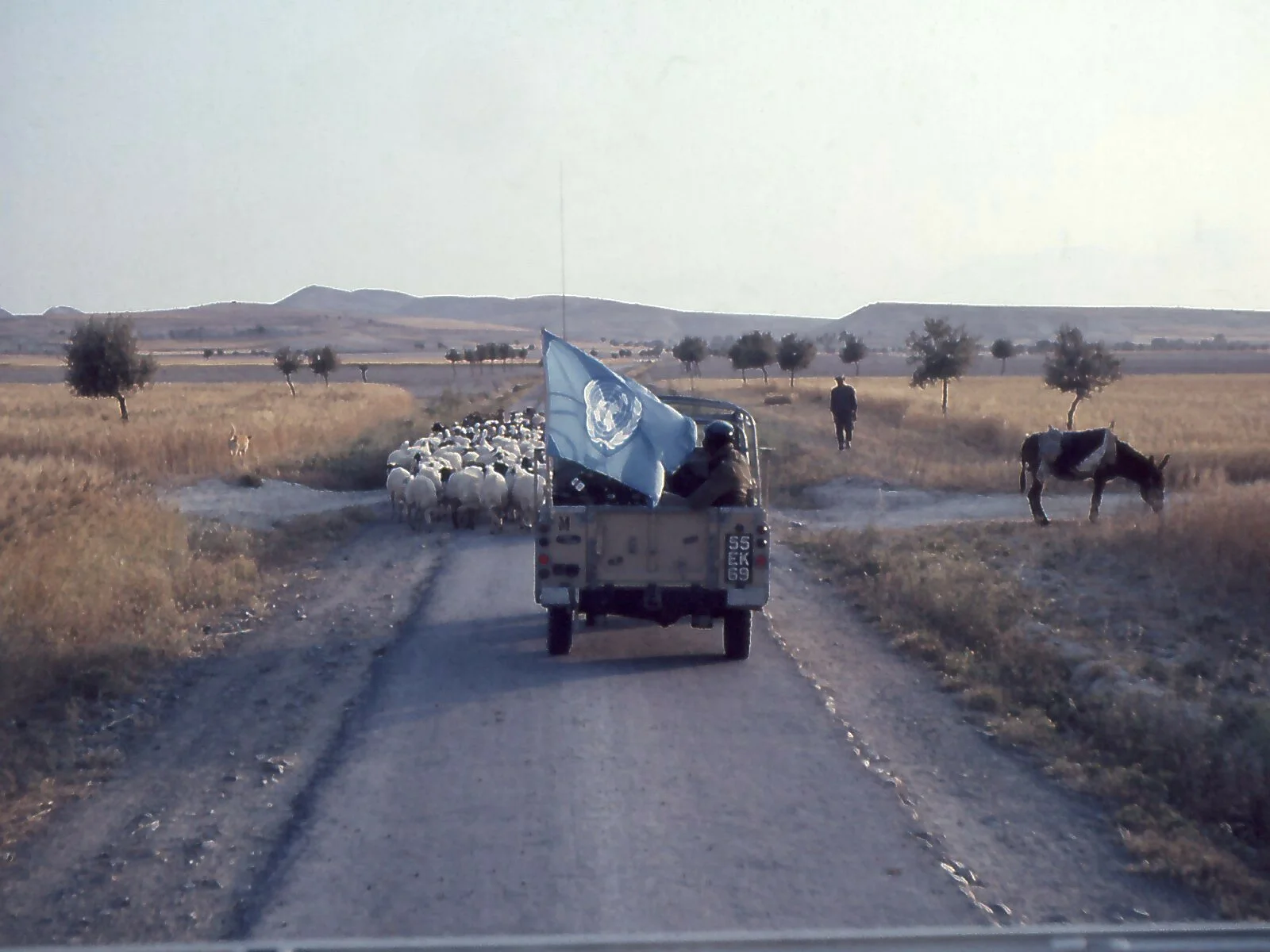
Photo: Tommy Nilsson
Quisque iaculis facilisis lacinia. Mauris euismod pellentesque tellus sit amet mollis.