
GÖSTA LUNDIN, SWEDISH PRISONER-OF-WAR RELIEF AND FOLKE BERNADOTTE

Gösta Wilhelm Lundin (1897–1965) was a Swedish educator and headmaster. He obtained a degree in theology from Lund University in 1928 and taught at Osby Higher Co-educational School from the early 1920s, later serving as its headmaster from 1955 to 1965. During the final stages of the Second World War and the years that followed, Gösta played an important role in relief efforts for prisoners of war in Germany.
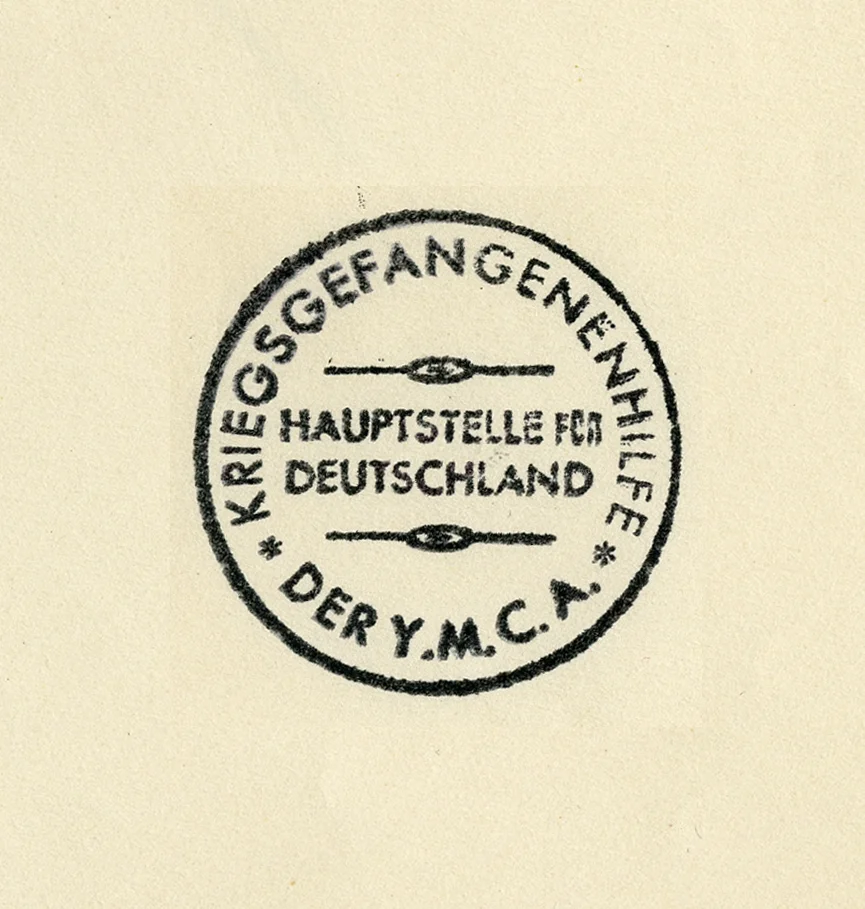
From 1944 to 1947, Gösta took leave from his teaching duties to serve as director of the World Alliance of YMCAs’ prisoner-of-war relief operations in Germany — Kriegsgefangenenhilfe des Weltbundes der Y.M.C.A.
The Swedish abbreviation KFUM stands for Kristliga Föreningen av Unga Män (Young Men’s Christian Association). The organisation was founded in London in 1844 and is known internationally by its English abbreviation, YMCA — Young Men’s Christian Association.

Gösta Lundin in his office in Lübeck, December 1946. From the Gösta Lundin Archive.
Gösta’s humanitarian efforts on behalf of Allied prisoners of war in war-ravaged Germany during the final stages of the Second World War played a crucial role. Among other responsibilities, Gösta maintained contact with the prisoner-of-war bureau of the Oberkommando der Wehrmacht (German Armed Forces High Command) in Torgau.
During 2018, The Swedish Peace Archives worked to digitise Gösta’s extensive archive, comprising approximately 10,000 items. The archive, which was transferred to the Swedish National Archives in March 2019, contains official correspondence concerning transports, as well as diaries and letters exchanged between Gösta and his wife Dagmar and their five children at home in Osby.

Gösta Lundin (right) beside his driver, Hansen. From the Gösta Lundin Archive.
Count Folke Bernadotte was assassinated (1895–1948) in Jerusalem on 17 September 1948.
During the final stages of the Second World War, Folke led several rescue operations in Germany on behalf of the Red Cross. He organised prisoner exchanges, which resulted in the rescue of between 15,000 and 20,000 people from German concentration camps through the so-called White Buses operation.
His attempts to mediate in Palestine, however, ended with his assassination by the Zionist paramilitary group known as the Stern Gang.

Prisoners of war. Unknown photographer. From the Gösta Lundin Archive.
Gösta Lundin met Folke Bernadotte in his capacity as director of Swedish Prisoner-of-War Relief, and on 25 May 1945, Folke wrote the following statement in his capacity as Vice-Chairman of the Swedish Red Cross:
“During my recent work in Germany for people of different nations who had been interned in concentrating camps I was in close contact with the director of War prisoners aid of Y M C A in Germany Mr Gösta Lundin. Mr Lundin is now continuing his work in Germany.
I would very much appreciate all help that the allied authorities could give Mr Lundin in his work which is if great importance for the prisoners of war of all nations. The cooperation that I had with Mr Lundin gives me the right to say that he has done and is going to do a splendid work.”

Count Folke Bernadotte’s letter of recommendation concerning Gösta Lundin’s suitability. From the Gösta Lundin Archive.
Among the archival materials left by Gösta Lundin are several drafts of memorial speeches honouring Folke Bernadotte. An extract follows.
“We had considered it entirely fitting that he, a Swede with his heart in the right place, had undertaken the difficult task of serving as the United Nations mediator in the Palestine question. It was with a sense of pride that we reflected on the fact that one of our own had been entrusted with this extraordinary responsibility. Yet probably not many people gave thought to the enormous risks involved. When the first news of the assassination reached us, we could scarcely believe it was true.”
“Count Bernadotte himself had a better understanding of what was at stake. He had experienced many dangerous situations during the war, particularly in connection with his visits to Germany during its final stages. And he knew that anyone who lives in a war zone is never safe. One must be prepared for anything, even for what most people regard as the worst thing that can happen: a sudden death, without the slightest possibility of escape.”
“However dark and tragic Count Bernadotte’s passing may seem to us — and indeed is, especially for those closest to him — there is nevertheless a certain radiance surrounding the death of this Swedish nobleman. His life had increasingly become a struggle for Christian humanitarianism and ideals, and he was destined to die while pursuing the noble purposes to which he had devoted the most vigorous and fruitful years of his life.”
“The writer of these lines had the opportunity to meet Count Bernadotte on German soil on several occasions during the final stages of the war and also during the first two years following the occupation. Various matters relating to international and Swedish relief efforts in Germany were discussed. I came to know Folke Bernadotte as a man and as a human being. He was a true gentleman and a man of honour, with or without his title of count.”
Gösta Lundin and Folke Bernadotte — almost the same age — were united in their commitment to Christian humanitarian ideals and practical humanitarian relief efforts.

Gösta Lundin attended the funeral service for Folke Bernadotte at Gustav Vasa Church on 26 September 1948. From the Gösta Lundin Archive.
Quisque iaculis facilisis lacinia. Mauris euismod pellentesque tellus sit amet mollis.