
“HOW DO YOU HAND OVER A COUNTRY?”
This account briefly describes the final stages of the Swedish UN mission in the Congo during the autumn of 1963 and the spring of 1964. The story was written by Corporal Bertil Bengtsson, who served with the 22nd Swedish Congo Battalion and became the Swedish UN peacekeeper who, as a member of the final guard patrol, symbolically handed the Congo back to the Congolese people. Parts of this account have previously been published in the magazine Fredsbaskern.
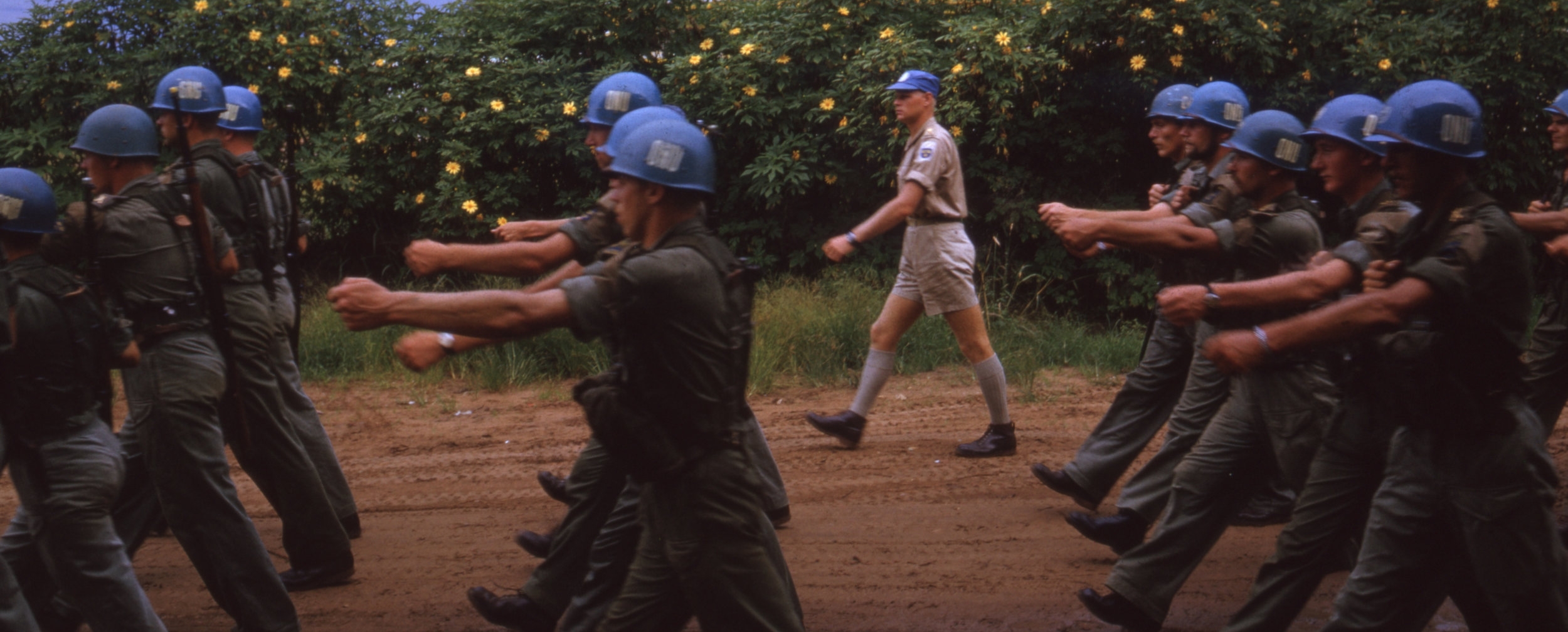
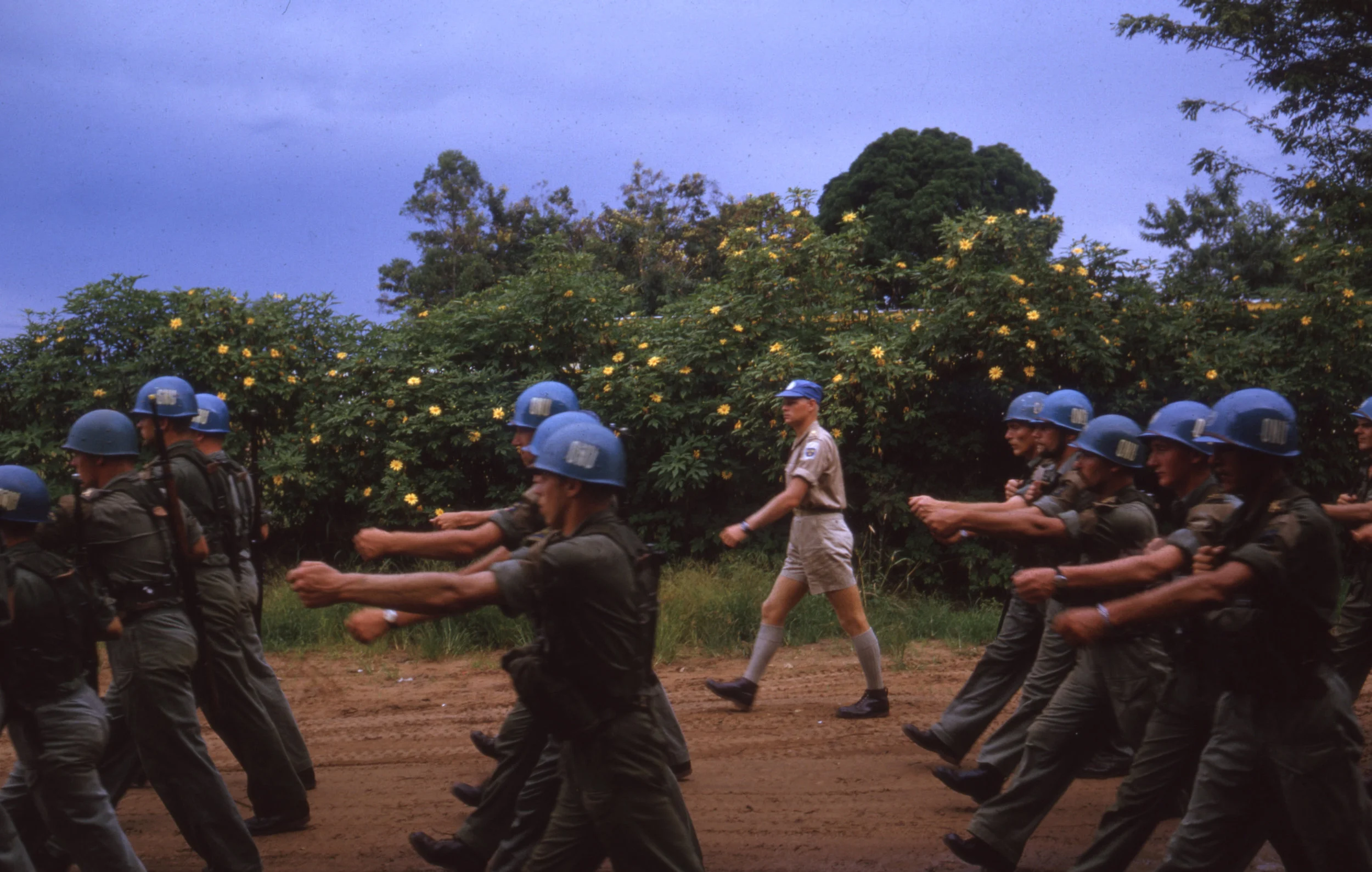
The 20th Battalion was originally intended to be the last Swedish UN battalion in the Congo. The prevailing international opinion, as well as the view held at UN Headquarters, was that since the secessionist province of Katanga had now been reintegrated into the Congo and hostilities had consequently ceased, the UN operation could be phased out. This became the principal task of the 20th Battalion during the period from April to October 1963.
The withdrawal operations largely involved repairing and restoring the vital electricity and water supply facilities within the area of operations. In addition, extensive and demanding patrols were conducted, partly with the aim of operating alongside ANC soldiers (ANC = Armée Nationale Congolaise), who had now been incorporated into the UN forces. These soldiers subsequently served wearing UN uniforms and blue berets.
It soon became apparent that it would not be possible to complete the withdrawal of the entire extensive UN operation within the planned timeframe. In November, Sweden received an urgent request from the United Nations to provide another UN battalion as quickly as possible. Sweden immediately began calling for applications, but this time exclusively from former UN veterans. This unusual procedure saved both time and resources, as the soldiers could be dispatched directly to the Congo without undergoing the customary training in Sweden.
The 22nd UN Battalion assembled for service in early December at I 14 in Linköping. Meanwhile, the remaining soldiers of the 20th Battalion, who had chosen to stay behind, struggled to maintain the most essential operations.
The first contingents of the hastily mobilised 22nd Battalion departed Sweden on the morning of 13 December, St Lucia's Day, just four days after being called up. The remaining members of the battalion, which had a total strength of 302 men, arrived at Kamina Base in the days leading up to Christmas 1963.
Stig von Bayer
The mission of the 22nd Battalion was the same as that of the 20th Battalion, namely to wind down the UN operation in the Congo. On 25 February, Kamina Base was formally handed over, according to accounts, to Belgium, which immediately transferred the base and its surrounding area of responsibility to the Congo. In any case, the ceremony was marked by the presence of the Swedish flag in the colour guard as the UN flag was replaced by the Congolese flag.
The battalion was then transferred by train and aircraft to Luluabourg, where its mission remained essentially the same over the following months. By now, calm had largely returned to the Congo. However, this was not the case everywhere. In areas where unrest continued to flare up, the UN still had the services of our very own Stig von Bayer.
The battalion's return to Sweden was scheduled for early May. This meant that the timetable established by the UN could be met as planned.
Increasingly alarming reports about the situation in Cyprus seriously disrupted what had been expected to be a peaceful conclusion to the 22nd Battalion's mission. As usual, Sweden received a request to contribute UN troops to this new trouble spot. During the final week of April, half of the 22nd Swedish Battalion, together with a newly formed battalion from Sweden, was on its way to Cyprus.
Nevertheless, everything in the Congo proceeded according to the planned timetable. Large quantities of equipment and supplies were packed up and shipped home. It was now the first week of May.
Responsibility for guarding the camp in Luluabourg had been taken over by our UN colleagues from the ANC. The only remaining guard duty for the 22nd Battalion was a storage building containing various supplies and equipment, including 16 unused coffins.
Towards the evening of 8 May, I was instructed by Warrant Officer Nilsson, platoon commander of the 3rd Platoon, 1st Company, to select a soldier to guard the aforementioned storage building. I was serving as a corporal and deputy squad leader of the 1st Squad. The guard duty was to begin at 6:00 p.m. and end at 6:00 a.m. on 9 May.
My own guard shift was from 4:00 a.m. to 6:00 a.m. At 5:45 a.m., a figure emerged from the darkness. It was the platoon commander, who briefly informed me that at 6:00 a.m. I was to cross the street to the ANC unit's quarters and announce that the UN's mission had now been completed. Responsibility for guarding and securing the areas previously under UN control, including the airport, would now pass to the Congo.
During those final minutes, my thoughts briefly turned to the four years that had passed since the summer of 1960, when the UN operation in the Congo had begun. For many of us, life would never be the same again.
The last few minutes slipped away. At exactly 6:00 a.m., I stood there in the middle of the street. Now it was my turn.
But what was I supposed to say? In what language? How does one hand over a country?
There would be no trumpet calls followed by flag ceremonies.
I took the final steps towards the door and knocked, then stepped back and waited. Just as the door opened, I suddenly knew what I was going to say.
Standing before me was a young corporal, just like myself, waiting to hear my message.
In my makeshift French, I delivered my announcement:
MON AMI – ONU C’EST FINI – CONGO S’IL VOUS PLAÎT

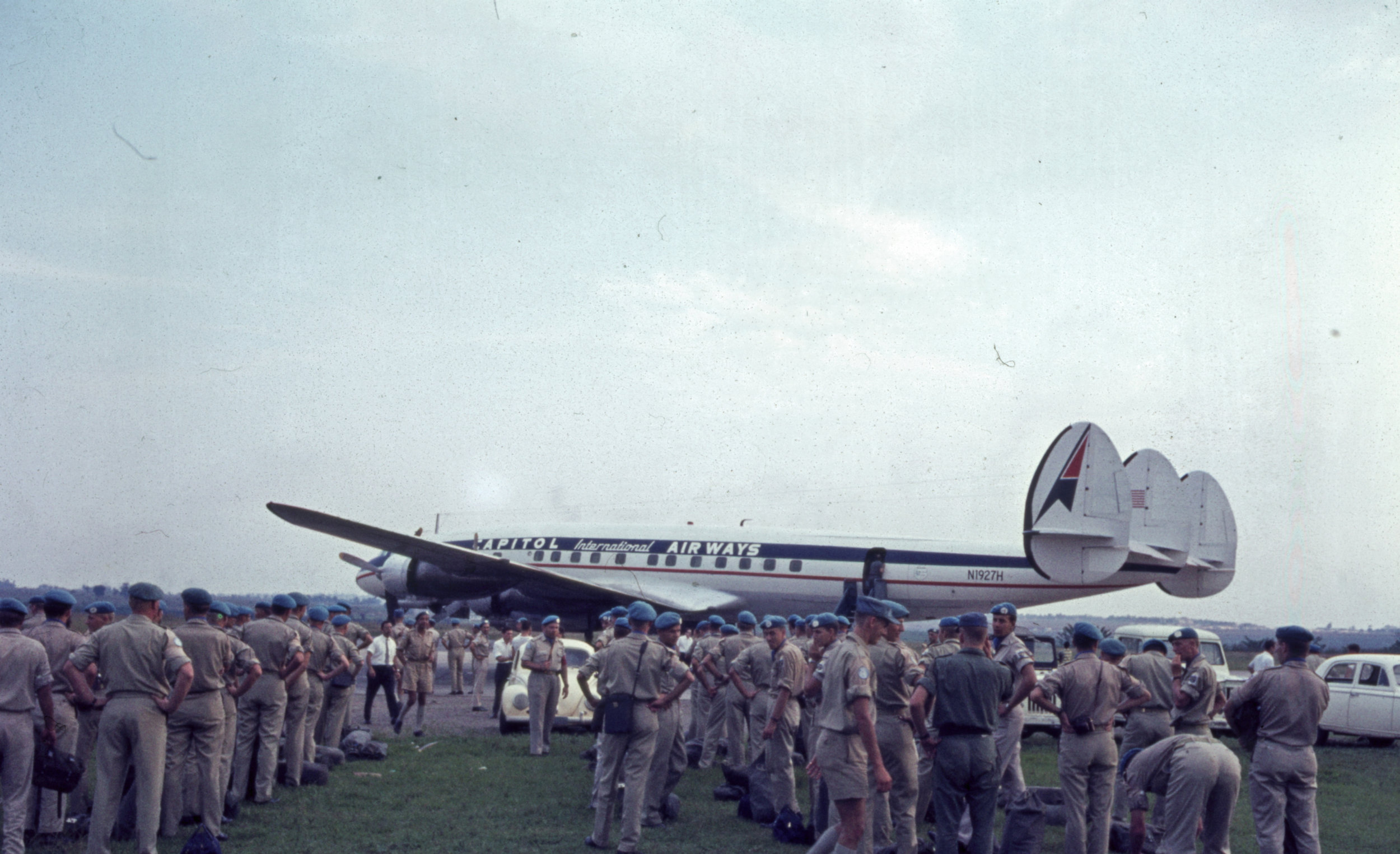
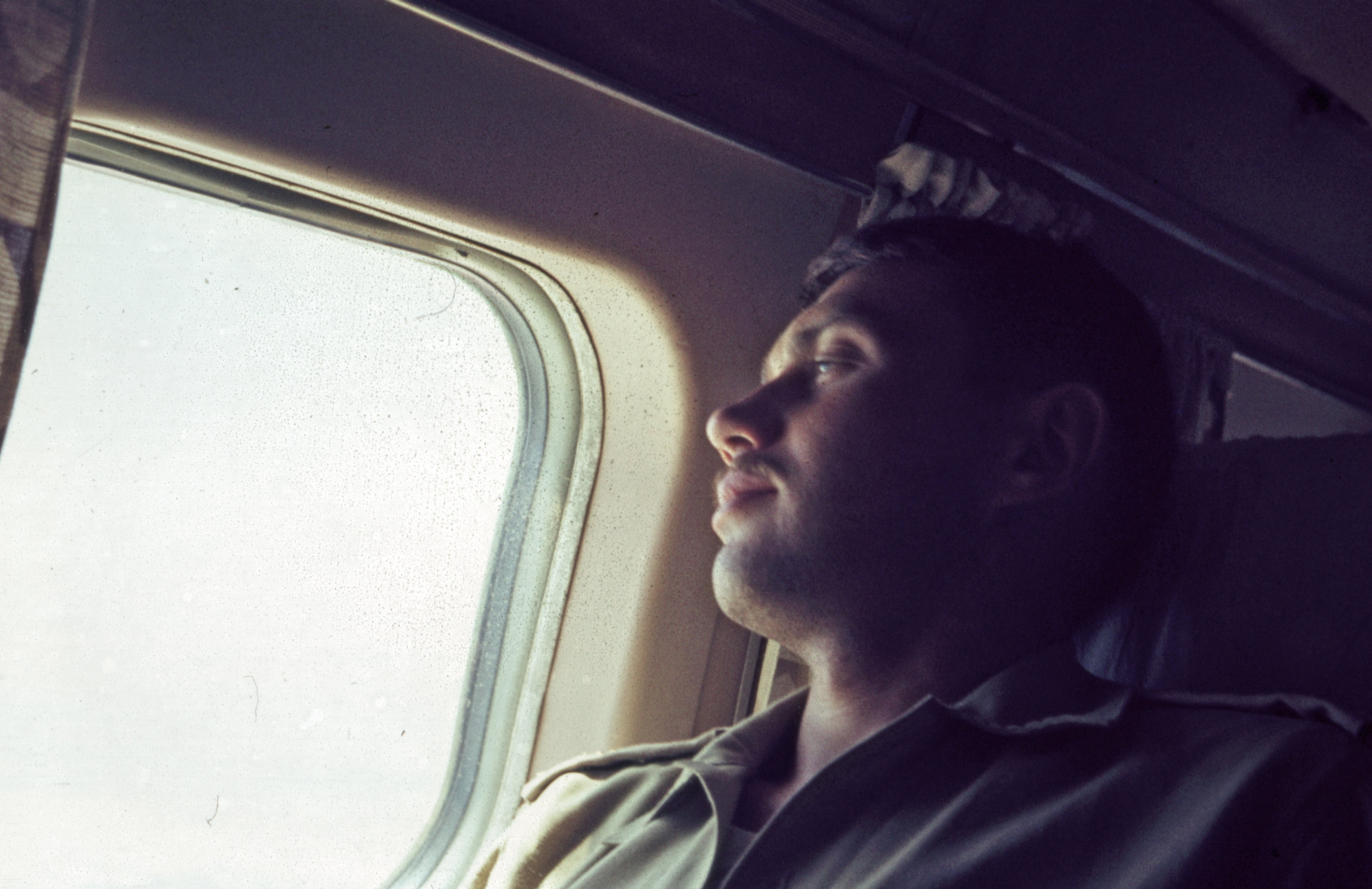
The handover was confirmed with a handshake, followed by a mutual salute. Late in the evening of 11 May, a Super Constellation aircraft, with seating for 94 passengers, took off. I was on board, on my way home to Sweden.
Much later in life, I came to realise that my brief speech at the handover should have ended with the words:
ET BON CHANCE (GOOD LUCK)!
Bertil Bengtsson
Quisque iaculis facilisis lacinia. Mauris euismod pellentesque tellus sit amet mollis.