
WITH THE RED CROSS IN GERMANY AND POLAND, 1945–1947
On the kitchen table lies a German army helmet from the Second World War. Its distinctive silhouette is familiar to most people. Beside the helmet are a couple of folded swastika flags and several boxes filled with medals, folders and assorted souvenirs.

Hanna, who contacted The Swedish Peace Archives in the autumn of 2015, lives in an apartment in the Östermalm district of Stockholm. Her grandfather, Bertil Fröderberg, served as a driver during the White Buses rescue operation in Germany in the spring of 1945. He also took part in subsequent Red Cross missions in Germany between 1945 and 1947.
Among the items Bertil left behind were two almanacs from 1945 containing his written observations and reflections on events during the missions, as well as a photograph album and a large collection of information materials. These will now be scanned and incorporated into the archive.
Here, you can read what he wrote in his almanac more than 72 years ago.


Among the materials we have been lent is a four-page set of instructions detailing how former concentration camp prisoners were to be disinfected. The text focuses exclusively on making the procedure as thorough and efficient as possible, without taking the patients’ psychological condition into consideration. This suggests that the circumstances were extremely difficult for everyone involved, and that the need to carry out the operation quickly and efficiently took precedence over concerns about the patients’ psychological suffering. Speed was often a matter of life and death, as the buses came under fire from Allied aircraft on several occasions. Many patients died during these air raids because they were often too weak to escape from the buses when the attacks began.


Bertil took part in the evacuation of prisoners from Bergen-Belsen concentration camp. He made the following entry in his almanac on 24 June 1945:
“Midsummer Day. Bathed 226 women from Bergen-Belsen. They were terribly emaciated.”
The photographs below were taken on 23–24 June 1945. They show the procedure described in the instructions above being carried out in practice.


During the Red Cross rescue operations following the end of the Second World War, Bertil was captured by Soviet troops and transported eastwards by train as a prisoner. On his third escape attempt, he managed to make his way back to Poland, where he resumed his duties for the Red Cross by locating and recovering buses that had been abandoned for various reasons during the rescue operation.
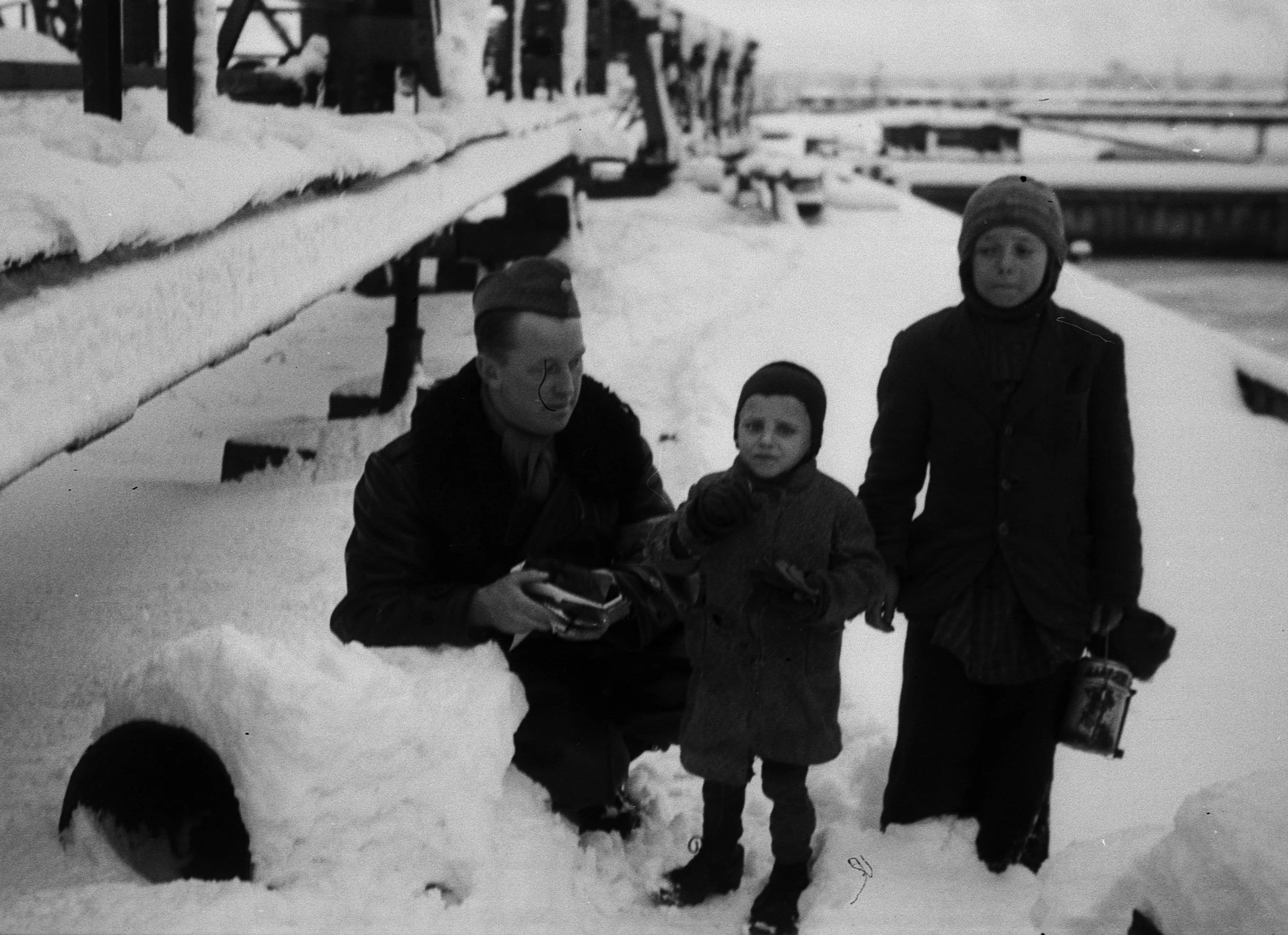
Bertil Fröderberg carried many traumatic memories with him from these missions. How many of his colleagues were similarly affected remains unclear, but the true number was probably very high. Hanna recalled that her grandmother would stay up for many nights listening to Bertil’s harrowing accounts of his experiences. One night, in a state of despair, he tore all the photographs out of the album he had compiled about the missions and never put them back. Three photographs, however, remained in place. They show Bertil himself with Norwegian children whom they were evacuating from Hohehorst on 22 July 1945 (see photograph below).
Quisque iaculis facilisis lacinia. Mauris euismod pellentesque tellus sit amet mollis.