
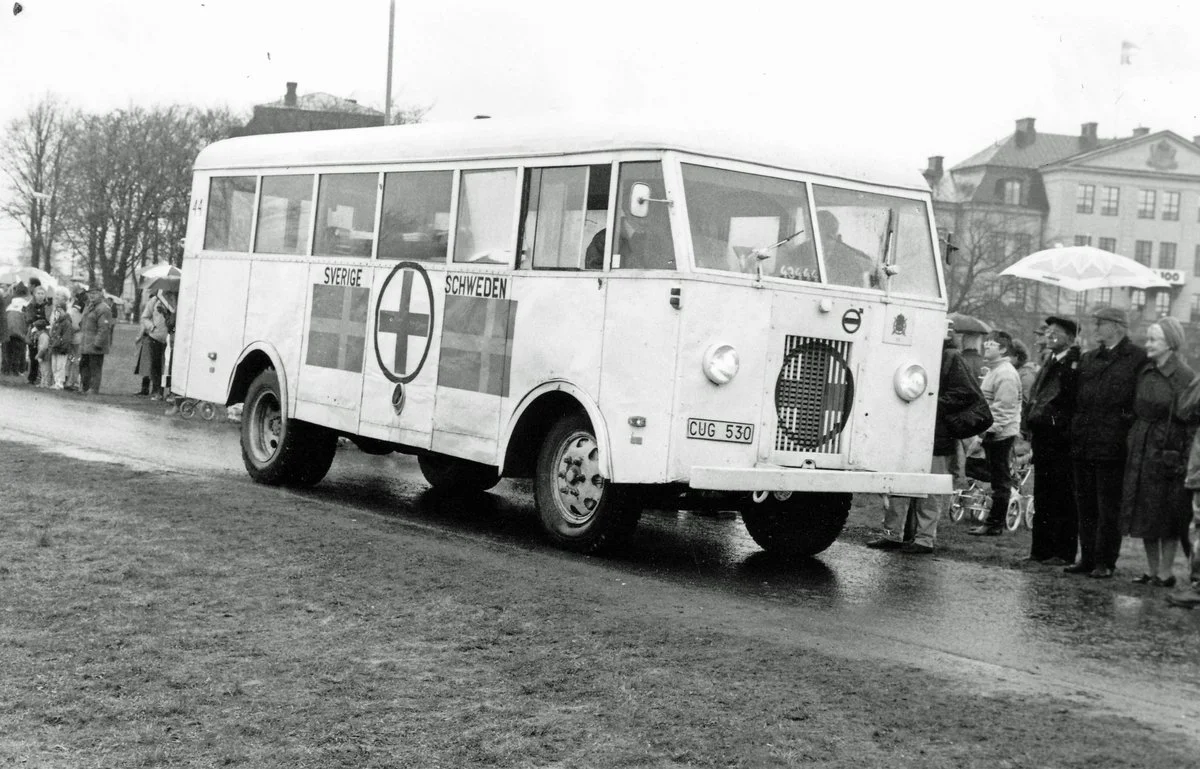
MEMORIES OF THE WHITE BUSES
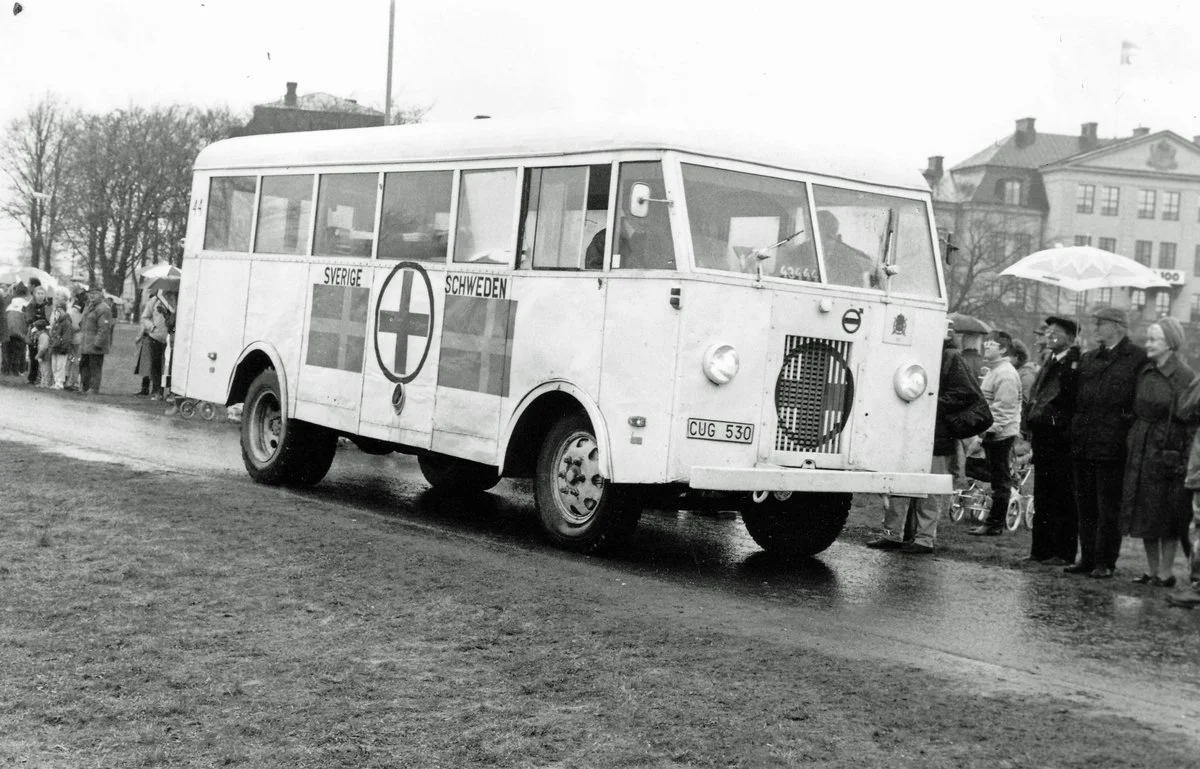
Photo: Unknown/DigitaltMuseum/Garnisonsmuseet Skaraborg
On the evening of 3 March 1945, Nils Johnsson received orders to report immediately to the Svea Army Service Corps in Linköping, where he was to be issued with equipment before taking part in the Swedish Red Cross rescue operation in Germany.
The operation, now known as the White Buses, was primarily intended to rescue Scandinavian prisoners from concentration camps and bring them to safety in Sweden.
Below, you can read Nils Johnsson’s written recollections of his experiences during the operation. The text has been carefully edited to improve readability while preserving the original account as far as possible.
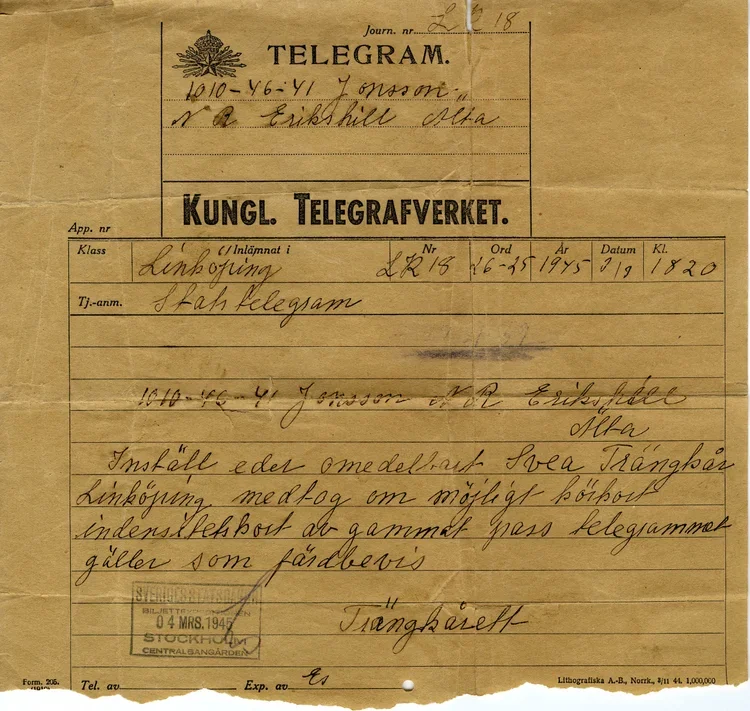
Official telegram containing orders to report for duty.
By Nils Johnsson
It all began when Folke Bernadotte travelled to Germany in early 1945 to persuade Himmler to allow Sweden to send personnel to Germany to transfer Scandinavian prisoners from the concentration camps and bring them to Sweden, or alternatively to gather them in a camp outside Hamburg. Himmler gave Folke Bernadotte permission to carry out the operation behind Hitler’s back. I volunteered to take part.
On 3 March 1945, Gerd and I got engaged, and we celebrated with a lovely dinner at Tre Remmare. Afterwards, Gerd went home to Ulriksdal, while I caught the last bus home to Älta. When I arrived home, Dad was still awake and said, “What the hell have you got yourself mixed up in this time? An official telegram has arrived ordering you to report to Linköping immediately.” I got myself ready and prepared to leave. There were no buses running during the night, but I was lucky enough to run into Gunnar, who gave me a lift to Stockholm Central Station.
The following morning, Gunnar telephoned Gerd and told her that I had left for Germany. There were lots of tears.
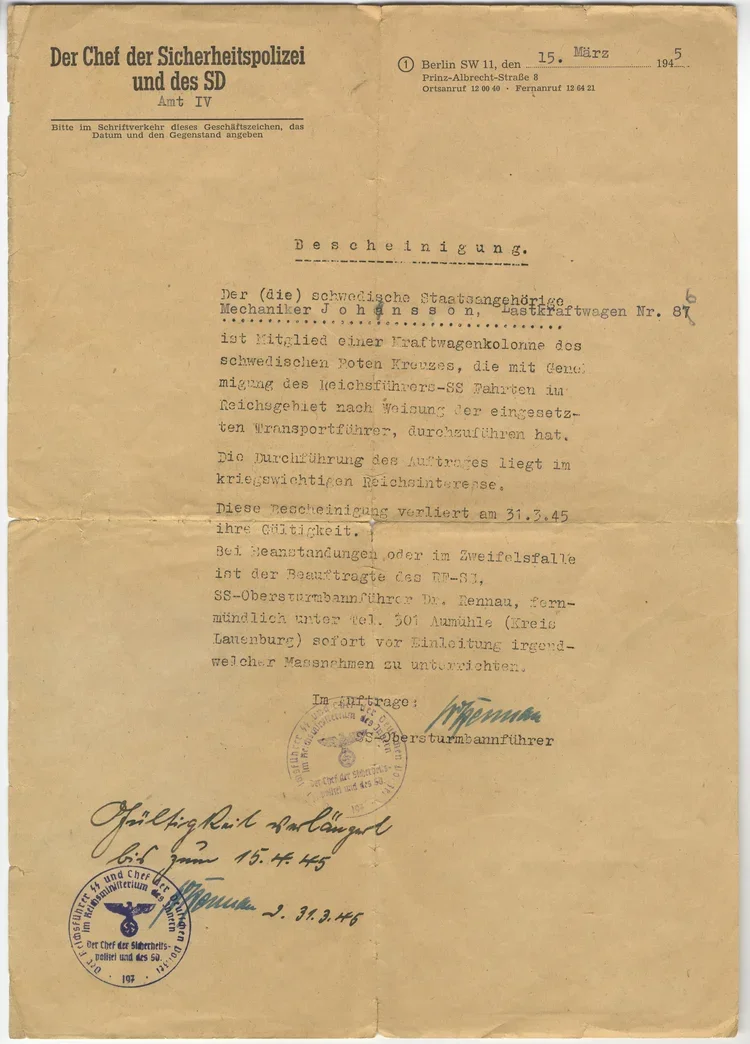
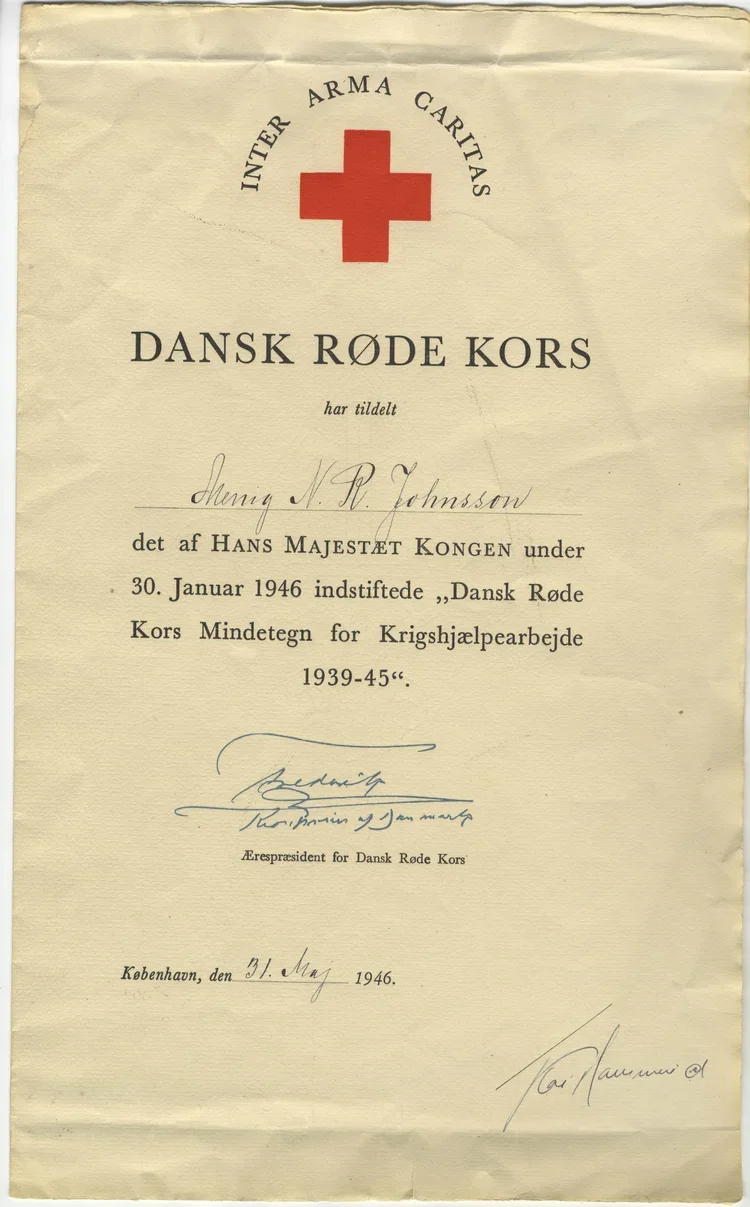
Certificate authorising mechanic Nils Johnsson to participate in the Swedish Red Cross White Buses operation. The certificate was issued by SS-Obersturmbannführer Dr Heinz Rennau.
In Linköping, the military provided us with vehicles, clothing and everything else we might need for our work in Germany. We then travelled to Hässleholm, where the vehicles were painted white with red crosses on their roofs. From there, we went to Copenhagen and then onwards across the Great Belt by ferry before continuing our journey to Germany.
The first city we reached was Kiel, which had been completely devastated by bombing. We continued to Hamburg, where we set up camp and pitched our military tents beside a wooded hillside. After a short rest, we travelled on to Sachsenhausen concentration camp, where we collected Norwegian and Danish prisoners, as well as a few Poles. We transported them to a prison camp outside Hamburg. We made this journey seven times.
On one of these journeys, I was standing smoking when a Norwegian prisoner approached me and asked for a cigarette, which I gave him. He then took a cigarette holder from his pocket and gave it to me as a token of thanks. I didn't have much time to speak to him, as we always had Gestapo officers accompanying us. However, before he was ushered onto the bus, he managed to tell me that he had received the cigarette holder from a Russian prisoner who had made it from Plexiglas and aluminium salvaged from a crashed aircraft. I hope he made it home to Norway.
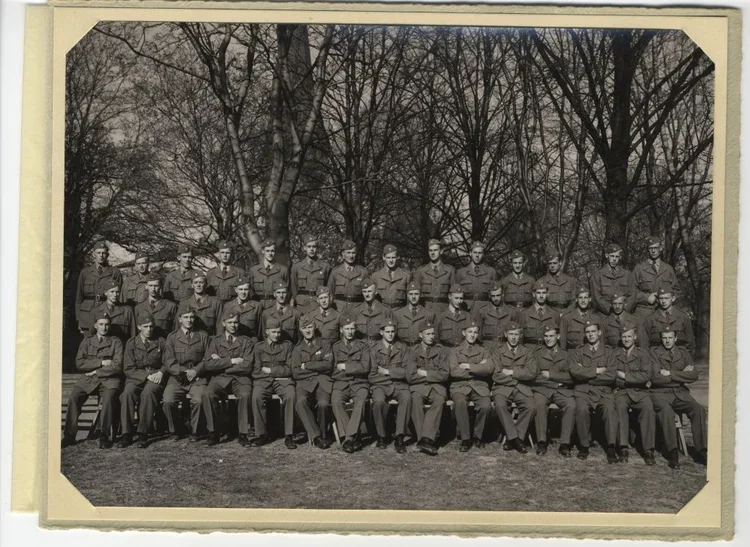
Nils Johnsson with his comrades.
We worked extremely hard and were so exhausted from all the night work that we were given chocolate containing some kind of stimulant drug. It helped for a while. After the seven journeys to Sachsenhausen, we were allowed a little rest. We spent the night near Torgau and agreed that we would set off again at four o’clock the following morning.
The next day was 1 April, and we had to put our clocks forward for daylight saving time. We headed east again. The Germans had an enormous gun, which they fired just as we were passing directly in front of it. That was the first time I felt genuinely frightened. The noise was absolutely deafening.
We continued our journey, and this time Lieutenant Svensson was travelling in our vehicle. He sat between my friend and me. My friend was driving, while Lieutenant Svensson slept with his head resting on my shoulder. We somehow fell behind the others and took a wrong turn, which irritated Svensson. Thankfully, we eventually managed to catch up with the rest of the convoy.
We collected Danish prisoners from a camp whose name I unfortunately can no longer remember. When we had finished loading the buses, the camp commandant came over and said, “I have three more Danes!” “They’re coming with us too!” Lieutenant Svensson replied. And so they did.
There were frequent air raid warnings over the radio. We had radios in all our vehicles, so we could hear when it was time to put on the handbrake, jump out and run for cover. The bombers posed no great danger to us, but the fighter aircraft were another matter. The British fighter pilots would fly over and take a look first, but the Americans were more trigger-happy. As a result, one of our lads never made it home.
The second time I was really frightened was when the fighter aircraft came over. I pulled on the handbrake, threw myself out of the vehicle and ran to take cover beneath a concrete structure. Before I reached it, I could almost feel the bullets striking my spine. Fortunately, it was just my imagination playing tricks on me, and I came through that experience unscathed as well. After that journey, we were allowed some rest.
Much later, we came in for quite a lot of criticism. What happened was that, after we had delivered prisoners to Hamburg, the Germans told us that the camp was full. We therefore had to take other emaciated prisoners with us and transport them to the camps from which we were supposed to collect the Scandinavians.
The prisoners we were ordered to transport weighed around 30 kilos each. We could not drive for more than an hour at a time before having to stop because they needed to get out. They were suffering from severe diarrhoea and vomiting, and the Germans used their rifle butts to strike them. Lieutenant Svensson then roared at the Germans to bloody well stop it, and strangely enough, they obeyed him. We were in no position to stand up to the Germans. They had weapons, but we did not. We could have abandoned the whole operation and gone home, but we chose not to. One of our final journeys took us to Hanover, and eventually it was time to return home.
Quisque iaculis facilisis lacinia. Mauris euismod pellentesque tellus sit amet mollis.