

ON THE BRINK OF A REFUGEE CATASTROPHE

But many, many others have sought UN protection for far more serious reasons. They believe that an uncomfortable, primitive and overcrowded existence near the Swedish battalion camp — and thus under UN protection — is their only conceivable option. In the present circumstances, life in their former homes is fraught with far too much uncertainty, insecurity... and mortal danger. (From the battalion magazine Djungeltelegrafen, issues 11–12, 1961.)
On 26 August 1961, around 30 refugees had sought shelter outside the Swedish battalion camp in Elisabethville, in the secessionist state of Katanga in the Congo. The refugees came from Kasai Province and marked the beginning of a wave of refugees that would reach enormous proportions within just a few weeks.
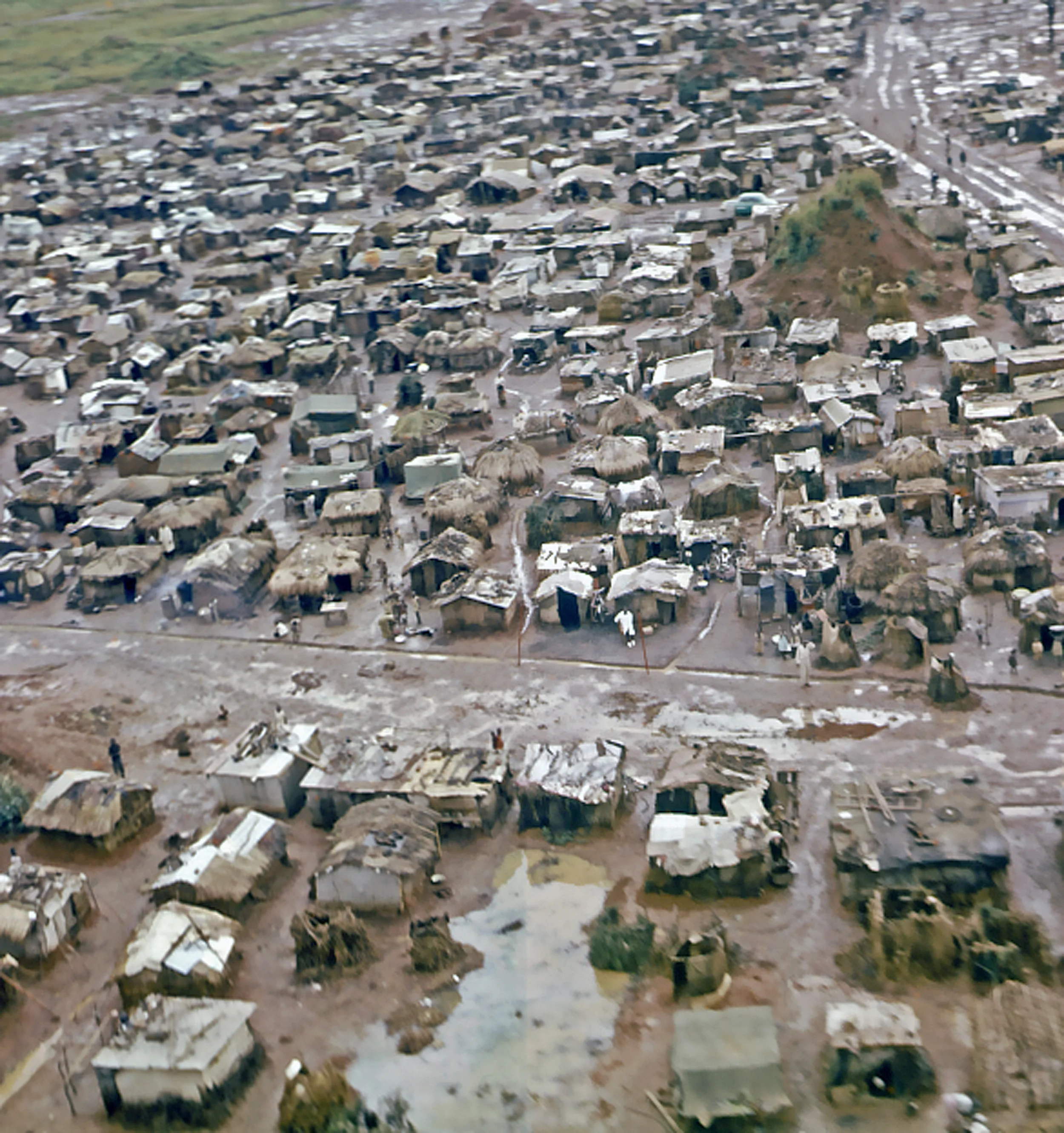
By Tuesday, 29 August, the number of refugees had risen to 400, and just five days later, there were 5,000 people in the camp. After that, refugees literally poured into the camp, and by mid-September, their numbers had peaked at approximately 40,000. The Swedish UN contingent was stationed at one end of the camp and the Irish contingent at the other.
The causes of the refugee influx remain unclear, but the UN's unexpectedly large-scale disarmament operation against Katangese forces, "Operation Rumpunch", on 28 August, almost certainly triggered a series of chain reactions that may, in turn, have led to the massive influx of refugees. Operation Rumpunch also aimed to arrest all foreign mercenaries, who formed the backbone of Katanga's gendarmerie. Getting the refugee camp to function presented an enormous challenge for the UN troops in every respect.
The Swedish battalion magazine Djungeltelegrafen (see image below) describes some of the measures that were taken.
STEADY REPATRIATION OF REFUGEES has been observed in recent weeks, largely thanks to considerable efforts. However, much of the enormous problem still remains. Of the 30,000 refugees, approximately 75 per cent, or just over 22,000, are estimated to be refugees from Kasai, while around 15 per cent (approximately 4,000) are Baluba-Kat. (Kat = Katanga). Among this latter group is the semi-wild and highly troublesome group known as the "Baluba Jeunesse" — young troublemakers who might be described as something of Katanga's "hooligans". The remaining ten per cent represent a total of eight smaller tribes."The headache job" is the title held by the Swedish Major Arne Torglund (Iggesund), who serves as camp commandant for the refugees. He is assisted by three civilian UN officials: the Dutchman Josst Kuitenbrouwer (responsible for administration at a special refugee office), the Portuguese Lino Vieira (responsible for distributing food within the refugee camp), and the Frenchman Jean Trac (who deals with repatriation matters, arranging travel, tickets and similar requirements for refugees who, for various reasons, are leaving Elisabethville).FOUR KASAI REPRESENTATIVES work closely with the camp staff, serving as interpreters, liaison officers, secretaries, registration officers (for births, deaths and illness within the camp), and, not least, as important contacts for receiving various requests from the refugees. These four men are Augustin Mwambela, Alphonse Kanyinku, Francoise Beya and Martin Tshimwanga.AT THE SPECIAL REFUGEE HOSPITAL, several refugees with previous hospital experience work alongside UN doctors from the Swedish, Irish and Italian contingents. Among them are eleven medical orderlies and those who perhaps bear the heaviest workload of all — four native midwives!EXPERTS AND SPECIALISTS from various organisations have visited the camp to study the enormous refugee problems first-hand. Discussions, deliberations and conferences have continued almost without interruption, yet nothing tangible or positive has been achieved. Nobody seems able to answer the question of what the future holds for the refugees. And life goes on in this jumble of primitive shelters made from cardboard, wooden sticks, scraps of cloth, sheets of metal, straw, grass and bamboo poles... Soon, two months will have passed since the first refugees sought UN protection. And now everyone awaits the dreaded rainy season with apprehension...In two letters home to his mother, Swedish UN soldier Lars Frost writes about Operation Rumpunch and the problems that could arise in the refugee camp.
The rapidly growing refugee population created opportunities for criminal groups to terrorise the other refugees. The most feared of these groups was the so-called "Baluba-Jeunesse", mentioned in Djungeltelegrafen above.
The Baluba people, who made up the majority of the refugees in the camp, were also attacked on several occasions by local residents living in and around Elisabethville.
Lars Frost describes the situation in the letters below.
Elisabethville, Congo, 4 September 1961
Dear Mother,
Yesterday, while I was sitting writing to you, the alarm sounded and we (15 men) were ordered to go to Kolwezi (300 kilometres away), where trouble was brewing, but the mission was cancelled. Instead, we went out on patrol, which means driving around the villages in an armoured car, demonstrating our strength so that nobody dares to "cause trouble". I took part in the disarmament of the gendarmes. We occupied the entire city. I was involved in capturing one of the radio stations at 5:00 a.m. last Monday morning. The staff at the radio station were asleep when we stormed the building. They woke up in terror with bayonet tips pointed at their stomachs. Among other things, we had President Tshombe in our custody, and I took the opportunity to photograph him while he was speaking with the deputy commander, Major Mide. He was subsequently released. We captured 53 white officers but left the black officers alone.
However, the black officers have now taken matters into their own hands and are persecuting black people belonging to the Baluba tribe, who are consequently seeking protection with us. Even so, plain-clothes gendarmes sneak into the refugee camp at night and murder Baluba people. One morning, our military police unit found ten mutilated bodies among the bushes on the outskirts of the camp.
Despite this, we maintain security around the camp throughout the night, using machine guns and powerful searchlights. I think the total number of refugees has now risen to 10,000. It is dreadful. They have brought all their belongings here and are building simple huts or shelters against the wind and sun. The children cry constantly. The day before yesterday, NN and I distributed rice. The queue was 50 metres long and seemed never-ending. The rice, however, did run out, and then there was an uproar. I told them to wait while we went to fetch more, but we were not allowed to distribute any more rice that day. We did not dare go back and tell them, because they would have lynched us. An hour later, when it was dark, we went back there. They were still standing there waiting, but we did not go all the way up to them. I wonder how long they stood there...?
(…)
Warm regards,
Lars
E-ville, 8 September 1961
Dear Mother,
Thank you for the letter and the money.
Things are relatively calm here, at least on the surface. The number of refugees arriving here is growing enormously. I would estimate that there are now between 30,000 and 40,000. They will soon be camped all around our compound. We stand guard around the camp, making sure that no more Katangese, plain-clothes gendarmes or police officers enter and kill anyone.
Yesterday evening, while we were at the cinema, we heard a couple of bursts of gunfire from the refugee camp. After a while, an ambulance went out and collected a woman who had been shot. She had three bullet wounds to the head. We do not know how it happened. Nobody saw anything. Personally, I think it was the Irish who shot her. They are as afraid of the dark as little children. When they are on guard duty, they move around the camp in groups, and if a crowd gathers around them, they fire into the air to disperse the people instead of using firm gestures to tell them to move along. She probably went outside to relieve herself and frightened an Irish soldier, who panicked and shot her.
(...)
Lasse
It was more than six months before the refugees were able to begin returning to their home regions. Despite severe hardships and a shortage of resources, the UN troops carried out their duties in the refugee camp very successfully. For further reading about the Swedish UN mission in the Congo during this period, Jonas Waern's book Katanga – Swedish UN Troops in the Congo 1961–62 is recommended.
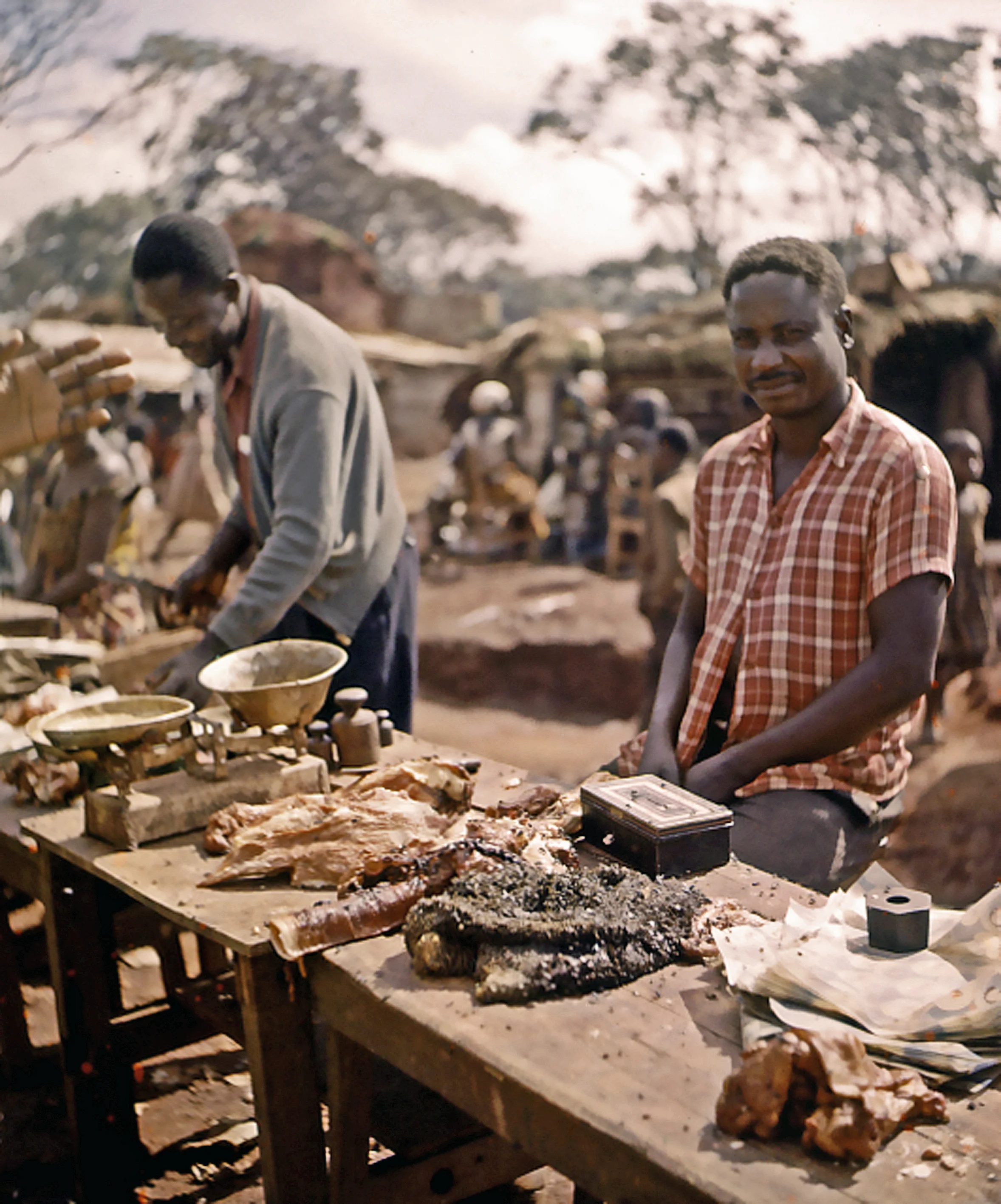
Below is a selection of photographs of the refugee camp held in the Swedish Peace Archive´s collection.




Quisque iaculis facilisis lacinia. Mauris euismod pellentesque tellus sit amet mollis.