
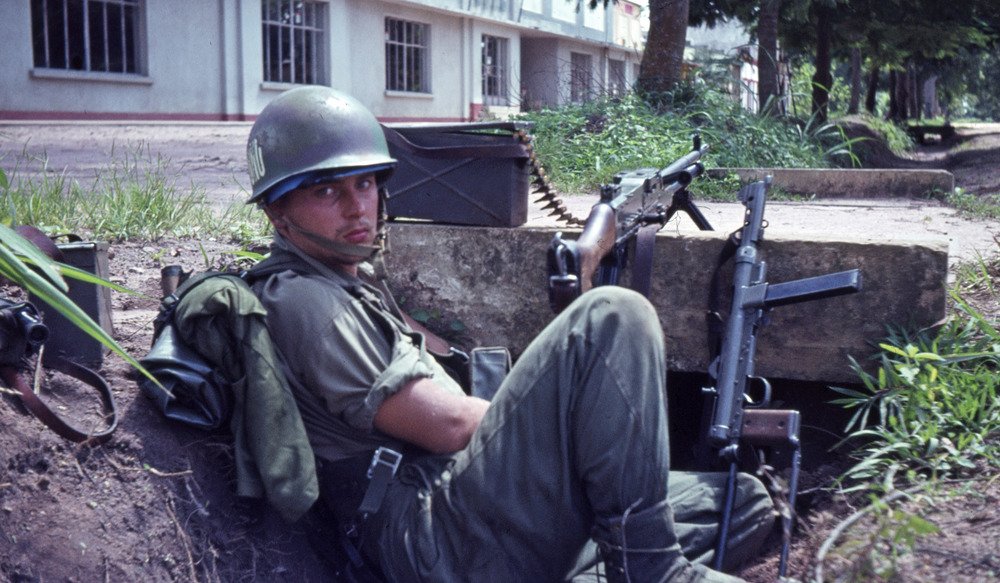
WHEN THE CAMP CAME UNDER SPORADIC FIRE
Photo: Åke Sandberg
The Swedish 12K Battalion was stationed in the Congo from 7 June to 15 December 1961. The situation was extremely tense, and Swedish UN soldiers were involved in fierce fighting on several occasions. Life at the Swedish camp in Elisabethville was particularly difficult, as it came under sporadic fire for extended periods.
Lennart Söreke, who served with the 12K Battalion, describes below what everyday life at the Swedish camp could be like.
By Lennart Söreke
Normally, I lived with my colleagues in a villa outside the camp itself, but during the fighting we had to move into the camp. Next to the so-called Signal Villa, where the signals platoon was stationed, stood the kitchen. Beside the kitchen was another villa that served as the dining hall.
On this particular day, I was about to have lunch and was just entering the dining hall when a shot rang out. I was holding my plate of food in my left hand and pressing down the door handle with my right when a bullet struck the keyhole directly beneath my hand. Strangely enough, exactly the same thing happened the following day, except that this time the bullet struck the door about 20 centimetres lower than the day before. Having escaped injury two days in a row, I decided not to push my luck and started having my lunch earlier.
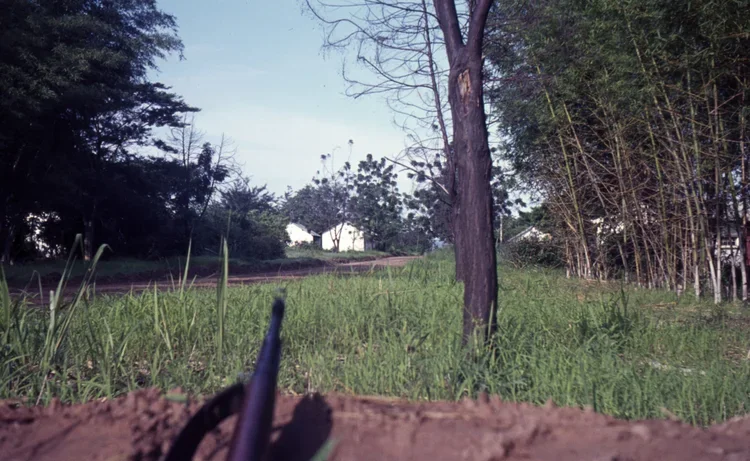
Photo: Åke Sandberg
The Signal Villa had a storeroom situated about ten metres behind the building. The properties were surrounded by thick hedges, which meant that whenever we came under fire, the bullets made a distinctive whistling sound as they passed through them.
If I was on my way to the storeroom to fetch something and walked at a leisurely pace, the shooting would start almost immediately, and I could hear the bullets whistling through the hedges. If, on the other hand, I ran to the storeroom, nothing happened. So, from then on, everyone made sure to run whenever they needed to visit the storeroom.
We came under fire from various types of weapons, including a 12 mm calibre machine gun. It had a lower rate of fire than machine guns normally did, making it very easy to recognise by its slightly deeper sound.
I was outside the Signal Villa when a burst was fired from this type of machine gun. I heard an unusual sound, as though something was losing speed, followed by a clattering noise on the villa’s roof. I was standing so close to the building that when I heard something beginning to roll down the roof, I managed to reach out and catch it. It was a still-warm bullet from a 12 mm calibre machine gun. I still have that bullet today (see photograph).
Despite the enormous number of bullets that were almost constantly flying through the air, thankfully very few of them caused any harm.
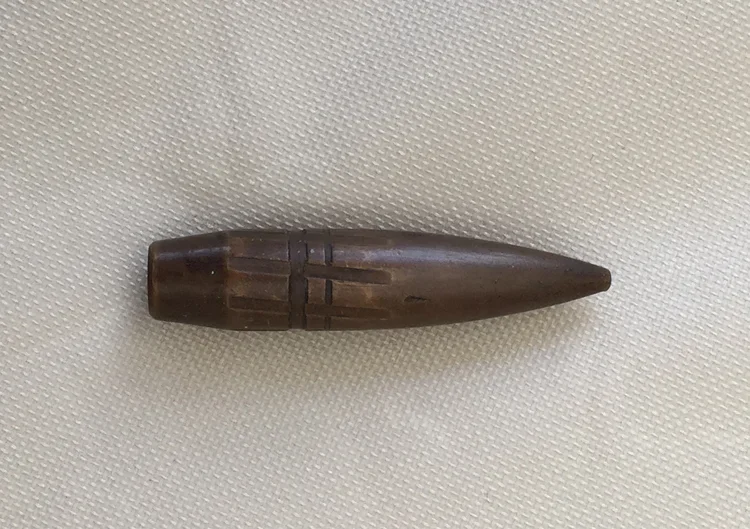
The Bullet That Rolled Down from the Roof
Quisque iaculis facilisis lacinia. Mauris euismod pellentesque tellus sit amet mollis.